
服务承诺
 资金托管
原创保证
实力保障
24小时客服
使命必达
资金托管
原创保证
实力保障
24小时客服
使命必达
51Due提供Essay,Paper,Report,Assignment等学科作业的代写与辅导,同时涵盖Personal Statement,转学申请等留学文书代写。
 51Due将让你达成学业目标51Due将让你达成学业目标51Due将让你达成学业目标51Due将让你达成学业目标
私人订制你的未来职场 世界名企,高端行业岗位等 在新的起点上实现更高水平的发展
 积累工作经验
 多元化文化交流
 专业实操技能
 建立人际资源圈
The Analysis of Jia Zhangke’s Art Films
2019-04-17 来源: 51due教员组 类别: Paper范文
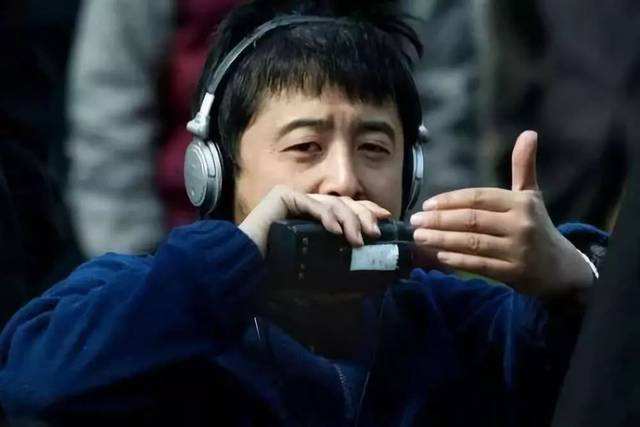
下面为大家整理一篇优秀的paper代写范文- The Analysis of Jia Zhangke’s Art Films,供大家参考学习,这篇论文讨论了贾樟柯的艺术电影。贾樟柯是一位对艺术电影有着强烈偏好的导演,他对艺术电影有着自己独特的思考。在贾樟柯的一系列电影中,他用独特的艺术视角解读了中国社会的巨变和普通人的命运变迁。通过无数的长镜头,贾樟柯展现了人们曾经熟悉的场景,给人们留下了一些固定的历史场景。他的作品将启发人们进行深刻的思考,试图以普通人的视角来表达自己的情感、思想和欲望。
Introduction
The film is taken as exotic for China, which is introduced to China as long as it is created. Under the influence of Hollywood’s films, people especially the younger generation have a strong preference to watch the Hollywood commercial blockbusters. Following this tendency, there is a rapid growing commercial tendency for Chinese films. With the popularity of Zhang Yimou’s “Hero” and Feng Xiaogang’s “The Banquet”, the Chinese films are apparently characterized with more and more investment, more and more powerful star cast and over publicity (Larson 89-91). It seems that commercial blockbusters would be the mainstream of Chinese current films. As Lin indicates, this has also brought many problems for the film market in China, such as immature mechanism, lack of qualified specialists, and unclear market management strategies. However, the presence of Jia Zhangke has drawn people’s attention away from merely commercial films. By moving his personal life experience and thoughts of reality onto the screen of film, restoring the function of film to its beginning reappearance and recording. Rather than merely records and reproduction, Jia Zhangke has structured his films to analyze the changes of the times from a unique perspective.
The Background of Jia Zhangke
Jia Zhangke, born in the 1970s, is known to the public as a Chinese film director. He is also characteristic representative of the “Six Generation” movement of Chinese cinema. Born in Shanxi Province, he is recognized as a director with Chinese grassroots folk image in the pursuit of reality penetration. Jia Zhangke is unique, who prefers to use the lens language to describe the price and fate changes that a great number of ordinary people have to bear during a huge social transformation era. Jia Zhangke is also outspoken, who makes criticisms on the lack of real life concerns related to contemporary films in China. When reflecting on Chinese movie history, the “Fourth Generation” directors are keen on morals and ethics in Chinese society, the “Fifth Generation” directors are obsessed with historical allegory while the “Six Generation” directors are indulged in unreal nature of Hollywood and the film industry. Therefore, Jia Zhangke’s strong humanistic concern for China’s reality is particularly valuable and significant under the current situation.
The image world created by Jia Zhangke is gradually becoming a special way to understand China, and he is also interpreting the realism of Chinese movies. As Lu (163-179) indicates, Jia uses visualization to ‘profane’ dominant ideology in China in its complexity, contradictory and fragmentation. Compared with previous popular critical realism, the narrative method of Jia Zhangke is quite and unassuming. He expands his documentary with distinctive style rather than simply make moral judgment. When compared with modern nihilism, Jia Zhangke is never deliberately mystifying, but to focus on the minor details in the historical changes and keep warm tone in the cold reality. Jia Zhangke shows his own artistic characteristics when creating films. He develops constant creative attitude towards reality. He has town complex when filtering story materials. He has a documentary film style. He takes adoption of many nonprofessional actors. Above all, he has a strong preference for long shot.
The Analysis of Jia Zhangke’s Works
Jia Zhangke has frequently used the long shot to express the art of movies, which can be seen from many of his works including “The Platform” “A Touch of Sin” “24 City” “Xiao Wu” “The World” “Still Life” “I Wish I Knew” and so on. Long shot is a shooting technique, relative to montage. Long shot refers to the distance between the starting point and the shoot off point, namely the length of the segment in a film. There is no absolute standard for the long shot, but it means relatively long single lenses. Long shot has its own features. Firstly, with strong authenticity, long shot can represent the real process of the events. In contrast, the montage can be deceiving with particular film editing techniques. Secondly, multiple meanings or uncertainties can be fulfilled during a long shot. Then, long shot mostly appear in moving photography forms. Finally, there is a rather long lasting period in a long shot. By using long shot, the directors are able to show the entire object or human figure, which are commonly designed to identify related surroundings. The long shot can be used to convey specific conception and aesthetic taste of the directors, such as describing psychological activities for the actors and the action scenes.
From “Xiao Wu” to “24 City”, there is a coherent style in Jia Zhangke’s films. From his lens, he exposes the fate changes of ordinary people to the audience, such as the ups and downs of their life and their misfortune. There is no explicit criticism on the society, but quiet records of the actions and changes occurring to ordinary people. Beyond the lens, Jia Zhangke has managed to express his concern for the fate of ordinary people, stimulating public’s reflection and commentary on reality through the comprehensive application of lens, screens and scenes.
The Platform
“The Platform” is the second mature film for Jia Zhangke. According to Berry, the Platform is an epic narrative that bears witness to China's roaring eighties and the radical transformation from socialism to capitalism. The name has deep implies in the first place. The platform means that the director has a unique perspective, the spectator perspective, to reflect the fate changes of ordinary people in the historical changes. The witness of the changes is exactly the platform, a relatively fixed item. People shuttling through the platform suffer from historical changes. Their thoughts, clothes, personal behavior and values all change following the times. In contrast, the platform sees the great changes with its special angle, making people to believe that the platform is eternal during the historical changing era. This can bring people to the memory of past.
Another implication of the name, the platform, refers to its transiting function for people and things. The place Fenyang in this film is a remote and backward rural village, which has extremely limited chances to exchange information and materials with the outside world. Nevertheless, the platform inadvertently acts as a medium of communication. People in the backward regions are able to move to the outside world through the platform, bringing the fresh air, latest information and new thoughts in return. The materials from the outside world also flow to Fenyang through the platform. Meanwhile, the change of thoughts and the abundant substances during the historical times act on people’s behavior and daily life through the platform.
The recording feature of the long shot has been applied to its acme in “The Platform”. The movie impresses people with strong record style through the whole process, during which the subjective role of the director can be seldom seen. People in Fenyang follow the reform and the opening up to the new era, and their changes are obviously marked with the Party and government policies. People move forward with the pace of the times consciously and unconsciously. When it comes to the application of camera lens, the panorama and perspective are typical for main figures. As for the camera motion, there are basically no fancy camera movements but with fixed camera motion. The camera motion involves the lateral movements by simply stimulating the subjective perspective or acting as the third viewing angle. The application of panorama and perspective can effectively increase the reality of the film. In addition, the long shot is also frequently used.
The film reflects a series of characteristics and changes which are marked with times through images. A number of images reveal characteristics of times and highlight the changes of the times. For instance, the opening performance means the praises on Chinese leaders, impressing audience with the fact that people still have unabated worships for the leaders even after the Cultural Revolution (0h 1m 45s). The slogan above the the stage “Struggle for the realization of the four modernizations” clearly reflects Deng Xiaoping’s vision and goals of the new society during the early days in the reform and opening up (0h 1m 18s). However, Jia Zhangke adds some ridiculous meaning in the film. He lets the actors to move forward on a bench when showing the scene of the train. This indicates the poverty and blocking state of Fenyang, which can be further confirmed in a scene that several heroes hurries to have a look when hearing the sound of the train (0h 6m 31s). In the official opening of the film, there is a long shot scene between the hero Cui Mingliang and his mother. His mother used a sewing machine to sewing clothes for him (0h 9m 04s). With strong characteristics of times, the sewing machine and the portrait of the prime minister Zhou Enlai vividly represents the displayed devices and decoration of an ordinary family in the early 80s. Entering the 1980s, China has begun to open its coastal cities and areas. The frontier culture in coastal areas has had an important impact on the mainland. The hero Cui Mingliang prefers to wear flares, reflecting the younger generations’ pursuit of fashion. But the conservative family members and colleagues are still unacceptable to the emerging new culture. An interesting scene in this film is that people gather together to watch videos about sex, reflecting the suppression of human nature during the Cultural Revolution. This also indicates that the simplification of entertainment or even no entertainment for people in this historical period. Another heroine Zhong Ping’s acceptance of having a perm and the performance of matador’s dance reflect the emancipation of people’s minds and their pursuit of pop culture. People’s gathering to wait for the arrival of electricity is further embodiment of the progress in the rural villages. Moreover, the popularity of Zhang Mingmin’s songs and the rock songs positively reflects the wide spread of pop culture in the early 1980s. There is also a change in the color of the film characteristics, from a single blue, white, and gray gradually to different colors, indicating the times impact on people’s lives. The last long shot scene is also meaningful. Lying in the sofa, the hero Cui Mingliang sleeps comfortably and his wife is playing with child (2h 2m 24s). When hearing the whistle sounds of the train, no one hurry to have a look anymore but to stay still. With the obvious contrast from the previous scene, the progress of the times and society is significantly embodied.
Still Life
“Still Life” is a famous work belonging to Jia Zhangke, which enjoys good fame in Europe. “Still Life” is screened in the competition at the 63rd Venice International Film Festival, being awarded with the Winner of the Golden Lion. This is also a film which successfully combines the big world perfectly with small figures. The film tells the story of two characters who are looking for their missing spouse. The hero Han Sanming is looking for his wife, not seeing each other for sixteen years while the heroine Shen Hong is looking for her husband, who has never been home since two years ago. Both of the characters are looking for something has been lost but they end with disappointment. Once a thing is lost, it is hard to get back. With the same same and two crossing clues, they are looking for the other half in life. They try to make efforts but just fail in changing their fate, being taken as tragic characters.
This is more than a simple story because of a big historical event, the construction of Three Gorges Project. Leaders have been devoted to this project for several generations, bringing great benefits to future generations, but this has also sacrificed people’s interest. With the dam, there is a rise in water level, the flooded coastal towns, followed by immigration problem. The start of the film is a long shot, showing different people’s postures, bringing s strong sense of epic and reality with visual impact. Following the hero’s searching plot, Jia Zhangke shows how human livelihood work hard to make a living. The underclass are not defeated by labor intensity, and their unconscious survival labor contributes to the construction of Three Gorges Project. Aimed at their performance, Jia Zhangke shows his praise and respect for them, trying to address the rapid change that has been transforming China (Rapfogel, 44-47).
Conclusion
In a series of Jia Zhangke’s films, he has used a unique artistic perspective to interpret the great social changes in China and the fate changes for ordinary people. Jia Zhangke once said, “I think I do have freedom to make my own films in China. I don't pay attention to other things [outside the filmmaking process]. I believe I should convey my ideas with all their integrity" (Lee). Through numerous long shots, Jia Zhangke shows the scenes that people used to be familiar with, which impress people with some fixed historical scenes. His works will inspire people to make deep reflections. For instance, what the social changes have brought to ordinary people and how should people make a living, these are also the realistic problems face by China. Touched by these situations, Jia Zhangke tries to express his emotions, thoughts and desires in the perspective of ordinary people, which no other Chinese directors are able to do.
Threaten by Hollywood blockbuster films, the living space for art films seems to be less and less. Many art film directors gradually get involved in commercial films as well. With the film industrial production, there is an irreversible tendency for the pursuit of profit maximization. Culture has great diversities. Film should also be diversified as a form of human culture. There are necessities for the existence of commercial films, accordingly, these art films are also essential, which reflect the profound reconsideration and review of a politics-art relation (Wang).
Jia Zhangke, a director with strong preferences for art films, has personal characteristic thoughts of art films. He has been on the way of art films for more than ten years. He persists in his dream of art films even under the pressure of the box office defeat. His persistence in art films and unique interpretation of Chinese politics and culture deserves admiration. No matter what his following films will be like, Jia Zhangke ‘s obsession with art films is unquestionable valuable. With film’s prosperity, modern film has its rationality.
References
Berry, Michael. "Jia Zhangke's 'Hometown Trilogy': Xiao Wu, Platform, Unknown Pleasures." (2009).
Larson, Wendy. "On Zhang Yimou's Hero: Counter-response." Journal of Chinese Cinemas 3.1(2009):89-91.
Lee Edmund. Jia Zhangke: why my films are received differently in China and abroad (2015)
http://www.scmp.com/lifestyle/film-tv/article/1871408/jia-zhangke-why-my-films-are-received-differently-china-and-abroad
Lin, Yun Tao. "The Enlightenment of the Hollywood Commercial Movie Model on Movie of China." Journal of Fujian Commercial College (2012).
Lu, Tonglin. "Fantasy and reality of a virtual China in Jia Zhangke's film The World." Journal of Chinese Cinemas 2.3(2008):163-179.
Rapfogel, Jared. "Still Lives in Times of Change: An Interview with Jia Zhangke." Cinéaste 33.2(2008):44-47.
Wang, Lijuan. "Reconsideration: A New Start of the Modern Transformation of the Art of Chinese Films." Journal of Guizhou University (2005).
51due留学教育原创版权郑重声明:原创paper代写范文源自编辑创作,未经官方许可,网站谢绝转载。对于侵权行为,未经同意的情况下,51Due有权追究法律责任。主要业务有essay代写、assignment代写、paper代写服务。
51due为留学生提供最好的paper代写服务,亲们可以进入主页了解和获取更多paper代写范文 提供作业代写服务,详情可以咨询我们的客服QQ:800020041。