
服务承诺
 资金托管
原创保证
实力保障
24小时客服
使命必达
资金托管
原创保证
实力保障
24小时客服
使命必达
51Due提供Essay,Paper,Report,Assignment等学科作业的代写与辅导,同时涵盖Personal Statement,转学申请等留学文书代写。
 51Due将让你达成学业目标51Due将让你达成学业目标51Due将让你达成学业目标51Due将让你达成学业目标
私人订制你的未来职场 世界名企,高端行业岗位等 在新的起点上实现更高水平的发展
 积累工作经验
 多元化文化交流
 专业实操技能
 建立人际资源圈
Us maritime hegemony in the asia-pacific
2019-04-18 来源: 51due教员组 类别: 更多范文
下面为大家整理一篇优秀的assignment代写范文- Us maritime hegemony in the asia-pacific,供大家参考学习,这篇论文讨论了美国的亚太海洋霸权。美国全球布局下的亚太海上安全战略是美国国家安全战略思想和原则指引下的产物。冷战结束以来,美国就亚太海上安全战略发布过一系列的政策报告和文件,而奥巴马执政后更新了美国的国家安全战略和亚太海上安全战略,尽管战略文件接连发表,但是其目标就是依据最新的国际和地区局势变化,修订或设计如何维护美国的海洋霸权。
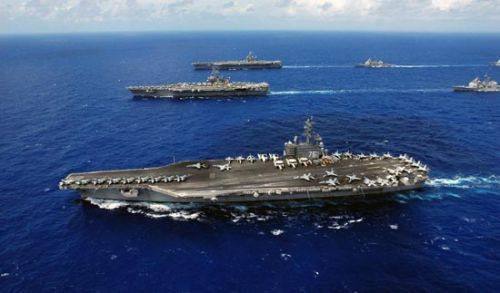
The national security strategy and maritime security strategy issued by the United States focus on the path selection between the present and the future, which is the selection process of strategy implementation and modification and a dynamic national plan. The asia-pacific maritime security strategy under the global layout of the United States is the product of the national security strategic thinking and principles of the United States. Since the end of the cold war, the United States is the asia-pacific maritime security strategy published a series of policy reports and documents, since President Obama came to power to update the U.S. national security strategy and the asia-pacific maritime security strategy, while strategic documents published in succession, but the goal is based on the latest international and regional situation change, revise or design how to maintain the Marine hegemony of the United States.
The asia-pacific maritime security strategy of the United States is an important part of its global layout. Throughout the development of the us global strategy, the asia-pacific ocean has been the focus of attention of successive us administrations. Only the September 11 terrorist attacks temporarily changed the strategic vision of the United States and shifted to the national security strategy focusing on counter-terrorism. The Obama administration gradually shifted its focus from the "war on terror" to the challenge from "state and non-state actors", and its long-term goal was to focus on the strategic thinking of state actors.
In the process of adjusting the us global security strategy, the emphasis on the asia-pacific maritime security strategy did not start from the Obama administration. In the first decade or so after the end of the cold war, the United States put forward such strategic documents as the national security strategy, maritime security strategy, east Asia strategy, asia-pacific community and the "21st century maritime force cooperation strategy", many of which involve maritime issues in the asia-pacific. Since 2009, under the banner of "change", the Obama administration has adjusted the global strategy of the United States. Its layout intention was to gradually adjust from the original "two major expansion plans" to shrink the Middle East, and then proposed the eastward strategic deployment of returning to the asia-pacific. In order to implement its strategic adjustment, the Obama administration has issued two new versions of the national security strategy, two new versions of the 21st century maritime force cooperation strategy, two new versions of the national military strategy of the United States, and the asia-pacific maritime security strategy.
Needless to say, the U.S. global strategy and the asia-pacific maritime strategy are aimed at maintaining its dominant position in the international political and regional strategic arena. The global strategic readjustment of Obama's first term lies in his return to the asia-pacific. By emphasizing the Pacific identity of the United States, President Obama has placed the core of America's maritime strategy in the Pacific region. Obama a second term of the strategic role of the Pacific Ocean, the shift in the direction of the Pacific - two of the balance in the Indian Ocean, and in 2015 for the first time put forward the concept of the Indian Ocean - Asia - Pacific, plot from a more broad space and scope of a counterweight to China, from the perspective of both the geopolitical plotting American strategic layout in Asia and the Pacific Ocean.
We can analyze America's maritime strategy from a broad and narrow perspective. The broad Marine strategy involves national Marine management and belongs to the scope of comprehensive Marine policy. At the beginning of new century, then US President George w. bush, according to congressional legislation, puts forward the ocean blueprint for the 21st century "document, the journal of the American Marine action plan, as a U.S. Marine strategy in the new century, involving the national Marine economy, Marine resources, Marine climate, Marine science and technology, ocean transportation safety, and other areas of the ocean policy fields.
The narrow sense of Marine strategy involves national security and belongs to the category of national maritime security strategy. Maritime security is an extension of maritime security of littoral countries and an integral part of national security. U.S. maritime security professionals believe that maritime strategy is a security concept and guiding principle related to maritime wars, which is used to form and utilize maritime forces -- navy, coast guard and Marine corps -- to safeguard the country's maritime security and achieve the national security objectives in time of war and peace. Compared with the broad concept of Marine strategy, the narrow definition of Marine strategy seems to be defined as maritime security strategy, focusing on military and warfare. For this reason, the us bush administration released the "us national maritime security strategy" in 2005 shortly after the 2004 Marine strategy, which is obviously different from the broad concept of Marine strategy. According to the narrow definition, this paper studies the asia-pacific maritime security strategy under the global layout of the United States, analyzes its objectives, connotations and related factors, and analyzes its geostrategic influence in the asia-pacific region and its influence on China's maritime security strategy.
The national security strategy and maritime security strategy issued by the United States focus on the path selection between the present and the future, which is the selection process of strategy implementation and modification and a dynamic national plan. In the United States, regular presidential elections lead to a change of government or a new government taking office. The new government will revise the existing strategy according to the new goal or simply redesign and propose a new strategy. Therefore, any us national security strategy may be revised due to domestic political factors, and the unpredictable international situation and complex geopolitical security environment may also have an impact on the further implementation of the strategy. From a positive point of view, even if a strategy has achieved results in the implementation process, sometimes in order to prevent deviation from the results already achieved, the national security council and other high-level officials will revise it according to the new situation. As a result, the design, formulation, or modification of U.S. national and maritime security strategies has largely followed the following steps: first, analyze and understand the situation and environmental changes. Second, constantly review and determine what the core interests are in the new situation. Finally, according to the judgment of the new security situation, we should plan for the future and modify and design the new strategy in the future. On this basis, we analyze the global and asia-pacific security situation from the perspective of the us strategic designer.
Since the beginning of the new century, the global security situation has undergone great changes. Under the background of assessing the situation changes, the us bush administration and the Obama administration have formulated corresponding national security strategies and maritime security strategies, and formulated specific policies to implement them according to the special requirements of specific periods. Despite the initial success of the bush administration's first term in the fight against Iraq and the war on terror, things did not go well in the second. As terrorist activities spread to Asia and southeast Asia, the problem of piracy has become more acute and the possibility of terrorists using pirate power has increased. The new security situation has prompted the bush administration to consider a maritime security strategy.
According to the bush administration, the United States faces five major maritime security threats. The second is the terrorist threat. The third is transnational crime and the threat of piracy. Fourth, the threat posed by the destruction of the Marine environment. Fifth, illegal immigrants at sea pose a threat to society and the region.
In order to overcome these maritime threats, the bush administration formulated the first "national maritime security strategy" of the United States in 2005, and put forward four objectives of achieving the national maritime security strategy. The other is to protect the safety of coastal population centers or residential areas, and to protect personnel and key facilities for social use from damage and attack. Third, we should improve our ability to prevent terrorist attacks and promptly repair the damage caused by terrorist attacks and maritime crimes. Fourth, protect the ocean and its resources. The strategy report also proposes five strategic actions to ensure the realization of its strategic objectives. These five strategic actions are: strengthen international cooperation, enhance maritime awareness, security and trade counterparts, deployment of layered security measures, safeguard maritime transport systems. In 2007, the U.S. government launched the 21st century maritime power cooperation strategy. This was done in what U.S. leaders see as a non-war and non-war world. The United States believes that peace will not always be with us. The world cannot live in peace forever. According to the us government, the main security factors that pose a potential threat to the prosperity of the us and the world are major power wars, regional conflicts, terrorism, proliferation of weapons of mass destruction, competition for energy and resources, social unrest and natural disasters. However, the major security challenges facing the United States in the new century are: social unrest caused by globalization, mobility of people, competition for resources, terrorism and transnational actions of non-state actors, failed states and weapons of mass destruction. In the asia-pacific region, the report stressed that the U.S. maritime strategy in the asia-pacific focuses on humanitarian crises, the spread of infectious diseases, maritime search and rescue, the fight against tsunamis, earthquakes and typhoons. The 2l century maritime power cooperation strategy proposes six strategic objectives and tasks. Second, prevent great power wars. Third, to win a national war, that is, when the United States is in a state of war, its naval forces should have the ability to implement local naval control, overcome entry challenges, and project naval power. Fourth, the implementation of local depth defense. Fifth, develop and maintain international cooperative relations. That is, the United States believes that international maritime security threats cannot be isolated and must rely on the participation of more international partners. Sixth, safeguard America's leading position in the international order and combat any actions that may undermine America's leading position, especially terrorist actions. To achieve these goals, the strategy identifies six core capabilities of U.S. maritime power: forward presence, deterrence, maritime control, force projection, maritime security, and humanitarian assistance and disaster response.
To sum up, the sudden September 11 terrorist attacks at the beginning of the new century were the main background for the adjustment of the national security strategy in the first term of the bush administration. The global strategic goal of the United States is to combat terrorism. Under the guidance of the national security strategy focusing on counter-terrorism and combating terrorism, military actions such as "pre-emptive strike" and "unilateralism" should be highlighted. Although the strategic adjustment of the United States has achieved certain results in the short term, the idea of the United States using the fight against terrorism to build a "new empire" has not been realized. In fact, the problems of terrorism, piracy and the proliferation of weapons at sea are more rampant and more serious, resulting in the further deterioration of the global and regional security environment. To ensure safe sea lanes block terrorists using sea channel spread, but also on the rising sea power and its potential impact on the administration of George w. bush in his second term began to fine-tune security strategy in the United States, for the first time in 2005 promulgated the "national maritime security strategy", insisted on anti-terrorism could play at the same time, begin to pay close attention of the potential threat of state actors, and puts forward the possibility that war powers at the local level. In 2007, the us government put forward the "21st century maritime force cooperation strategy". From the perspective of naval strength, the deployment of the us maritime force truly started the transformation of maritime power in the new century, and put the security strategic vision into the sea.
Obama became President of the United States in January 2009. It was a harsh winter for the United States. The Obama administration wants to restore confidence and maintain U.S. leadership in the world "at a time of change." The judgment and actions taken by the Obama administration during its first term have the characteristics of strategic adjustment during the transition period. During this period, a series of strategic reports related to national security and military strategies were issued, including "national security strategy report", "national military strategy report", "quadrennial defense assessment report", "nuclear situation assessment report" and "maritime strategy report". The Obama administration is trying to shake off the toxic legacy of the bush administration, seeking a firm break with its predecessor and improving America's image abroad, as seen in the frequently released strategy papers. The basic judgment that can be made from this is: the strategic posture consciousness of the United States has changed from "pax Americana" to the international pattern of "rule by multiple forces led by the United States"; The strategic guiding ideology changed from "regime change" advocating force to "smart power" using both hard and soft means. The strategic vision was changed from focusing on the military security field centering on counter-terrorism to emphasizing economy, education, science and technology, energy, nuclear security, Internet and space activities. Strategic layout intention from "two big expansion plans" to shrink the Middle East and return to Asia "west retreat east" deployment; The strategic objectives and tasks are adjusted from focusing on the "war on terror" to a comprehensive balance of "balancing politics and economics". From winning two conventional wars at the same time to winning "the current war" for the first time; The strategic means changed from "unilateralism" to "selective multilateralism".
The first term of the Obama administration's strategic adjustment to the United States is not fundamental, but it does have a lot of substantive connotation. From the perspective of hard power, the United States has the most powerful military in the world, and its military position is unique in the world, by which the United States tries to maintain its peace and international order. During this period, the focus of America's global strategic adjustment was to return to the asia-pacific. President Obama has confirmed that the United States is an asia-pacific country and should shift its strategic focus to the asia-pacific region. The Obama administration's strategy of moving east and rebalancing the asia-pacific requires strategic adjustments in the seas around China and in southeast Asia. From the perspective of geo-strategic actions, the Obama administration established several military bases with Singapore as the core along the south China sea through its military deployment in the waters around China, signed the enhanced defense agreement with the Philippines, returned to the Philippine naval and air bases, and intended to use Vietnam's CAM ranh bay. At the same time, the us will use its soft power to maintain its international standing. Mr Obama said the country's democratic institutions and universal values remained "shining". Based on this, we can continue to "advocate and promote basic human rights in accordance with the model established by the United States" and promote and enhance American values. The Obama administration is also examined some inappropriate behavior in the process of American counterterrorism, especially of torture, and so on, say the United States should be to promote universal values in the form of domestic practice, rather than by force impose their ideology and values and people in other countries, think that America will abandon the torture behavior of this kind of values at odds with the United States, and is committed to the pursuit of constitutional spirit of the rule of law and the spirit to the expanding to every citizen's determination to achieve.
51due留学教育原创版权郑重声明:原创assignment代写范文源自编辑创作,未经官方许可,网站谢绝转载。对于侵权行为,未经同意的情况下,51Due有权追究法律责任。主要业务有assignment代写、essay代写、paper代写服务。
51due为留学生提供最好的assignment代写服务,亲们可以进入主页了解和获取更多assignment代写范文 提供北美作业代写服务,详情可以咨询我们的客服QQ:800020041。