
服务承诺
 资金托管
原创保证
实力保障
24小时客服
使命必达
资金托管
原创保证
实力保障
24小时客服
使命必达
51Due提供Essay,Paper,Report,Assignment等学科作业的代写与辅导,同时涵盖Personal Statement,转学申请等留学文书代写。
 51Due将让你达成学业目标51Due将让你达成学业目标51Due将让你达成学业目标51Due将让你达成学业目标
私人订制你的未来职场 世界名企,高端行业岗位等 在新的起点上实现更高水平的发展
 积累工作经验
 多元化文化交流
 专业实操技能
 建立人际资源圈
The laws governing preschool education in the United States
2019-04-09 来源: 51due教员组 类别: 更多范文
下面为大家整理一篇优秀的assignment代写范文- The laws governing preschool education in the United States,供大家参考学习,这篇论文讨论了美国学前教育的相关法律。在影响儿童早期学习能力的各种因素中,以家庭经济地位为基础的家庭背景成为决定因素之一。低收入家庭儿童的发展水平在许多方面落后于中产阶级家庭的儿童。鉴于此,美国于1987年颁发了《提前开始法》,主要面向未达到义务教育入学年龄的低收入家庭儿童,向其提供免费的教育和其他特定的服务以使这些儿童能充分发挥其潜能,提高其入学准备的水平。
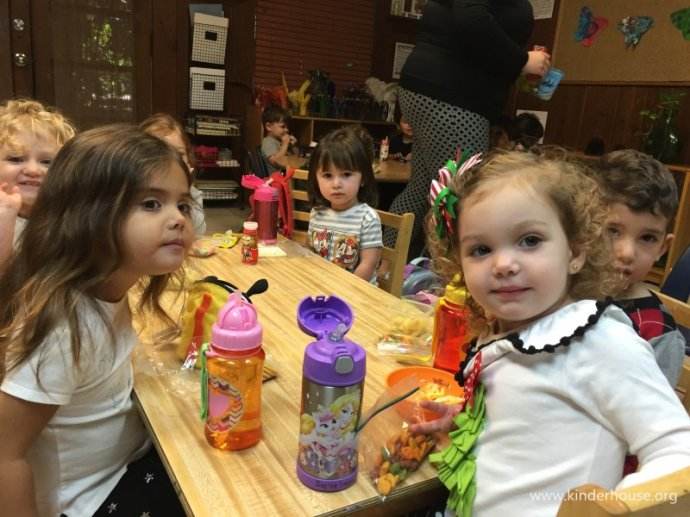
The United States is one of the countries in the world with a relatively complete legal system, and its spirit of advocating the rule of law is also fully reflected in education. With the publication of a series of studies on early childhood development and learning ability, the learning potential of early childhood and the importance of early educational experience have received widespread attention. Preschool education is regarded as a critical period to guarantee children's later academic achievements. Therefore, the American government attaches great importance to preschool education through a series of relevant legislation.
Over the past three decades, the United States federal government has officially issued written laws directly targeting preschool education, including the early start act of 1981 and the early childhood education and development act of 1990. In addition, laws related to preschool education include the child care and development fund act of 1990, the national child protection act of 1993, the goals for the year 2000: American education act of 1994, and the no child left behind act of 2002.
By introducing the early start act and its amendments, the goals for the year 2000: American education act and no child left behind act, this paper will discuss some basic features of American preschool education legislation and analyze the main problems existing in them.
Research on children's early learning ability proves that family background based on family economic status is one of the determinants among various factors affecting children's early learning ability. The development of children from low-income families lags behind that of children from middle-class families in many aspects. In view of this, in 1965, the United States began to implement the "early start" program, which provides free health, education, nutrition, social and other specific services to low-income children who do not reach the age of compulsory education to enable these children to fully realize their potential and improve their school readiness.
The early start program has been highly recognized since its implementation, and a series of studies have proved that the program is effective in improving the school readiness of children from low-income families and narrowing the gap with middle class children. In order to better promote and standardize the project, in 1987, the federal government enacted, the early start act grants to "start" ahead of plan number and use of funds to make clear rules, and the plan of service object, service content, service quality evaluation, hiring and training of teachers, and so on various aspects put forward specific demands.
Since then, in 1994, 1998, 2003, 2005 and 2007, the U.S. government for the bill was revised and reauthorization, in each of the revision of the content mainly involves: broaden the "start" ahead of plan of service objects, increase the requirement of teachers' professional quality and improve the quality of education standards, strengthen the management of "early start", etc. Financial input into the early start program is the core of the early start act and its amendments. In 1981, the early start act provided that the federal government allocated $1.07 billion to the early start program. In 1995-1998, the average appropriation was more than $3.5 billion per fiscal year; From 1999 to 2005, each fiscal year increased to $7 billion; Under the 2007 amendment, the federal government plans to increase funding from $7.35 billion to $8 billion between 2008 and 2010.
In 1989, the governor of the 50 state research developed the 2000 target: American education law, puts forward the six national education goals: President Clinton took office after the six to eight national education goals, and submit the draft the 2000 target: American education law, the draft in March 1994 formally became law, it is the most important in the United States more than ten years a school education reform. The first of the eight goals is directly related to pre-school: "by the year 2000, all children should be ready to go to school." The goals include: quality, developmental and adaptive preschool education for all children to prepare them for school; Every parent is the child's first teacher and needs to put in some time every day to help children learn; All children must receive the nutrition, health care and physical exercise necessary for their growth so that they enter primary school with a sound mind and a strong physique.
Goals for the year 2000: American education act is the key to the U.S. government's education reform to improve economic competitiveness. It further strengthens the embodiment of the federal government's intervention in education, and the impact of the focus on education quality and the establishment of unified national education standards on the stage of preschool education is also obvious.
In 2007, George w. bush, former President of the United States, became more aware of the importance of education, especially early education and basic education, and initiated another education reform to further enhance children's reading, mathematics and science level and improve the quality of education. The no child left behind act, formally passed in 2002, epitomized this reform. The reform set the goal that "every child should receive a good education, which means that no child should be allowed to lag behind academically, and every child must learn." The law aims to close the academic achievement gap between children from low-income families and those from wealthy families.
The no child left behind act's primary focus on preschool education is the "reading first program," which helps states and school districts improve early literacy in kindergarten and lay the foundation for future academic development. The reading first program is about creating a comprehensive, state-wide reading program to ensure that every child can read by the third grade. Fair start family literacy programmes; Support reading first through early childhood reading programs, and support reading learning through pre-school programs and early start programs.
To keep reading first in place, the no child left behind act increased funding for the program from $300 million in 2001 to $900 million in 2002. In addition, the federal government appropriated $75 million in 2002 for reading first specifically for the early reading program, and has matched that amount annually for the past five years. Under the fair start family literacy program, an appropriation of $260 million was authorized in 2002, and this amount is guaranteed in each fiscal year for the following five years.
In addition, in order to improve the quality of teachers in kindergartens and primary schools in reading, mathematics and science, no child left behind law also provides abundant funds for the training and employment of teachers in this field. In 2002, the fund for this field was 3 billion us dollars, and the budget for this field was up to 4 billion us dollars in 2003. Sufficient financial input has significantly improved the quality of teacher training and training in American language education, mathematics education and science education, thus effectively promoting the quality of American mathematics, science and language teaching.
Evidences refer to the fact that American preschool education legislation is based on relevant researches of preschool education. As can be seen from a series of legislation specifically aimed at or involving preschool education, the introduction of relevant laws is firstly rooted in some social problems, for example, the launch of Sputnik satellite of the Soviet union caused Americans to reflect on education. Then, corresponding researchers will conduct in-depth discussion on these social problems and understand the reasons behind these problems. For example, cross-cultural studies have found that American children lag behind children from other countries in reading, mathematics and science. These results are the direct impetus for the introduction of relevant laws in the United States. The goals for the year 2000: American education act, no child left behind act, etc., are based on these findings and attempt to solve these social problems in the form of legislation.
Therefore, the relevant research provides the basis for the legislation of preschool education. Because of the importance of relevant research in preschool education legislation, the federal government usually encourages researchers to conduct in-depth research in the form of grants in the law. Therefore, preschool education legislation is also the guarantee of preschool education research.
One of the important preconditions for the realization of law is the operability of law. Another important feature of American laws related to preschool education is its strong operability, which is mainly reflected in the following two aspects:
American preschool education related legislation is targeted to focus on legislation, usually involving smaller issues, but detailed provisions of each content, strong operability. Such as the early start act and its amendments are specifically for the children's early education problems of low-income families of law, in order to ensure that money can do for the children of low-income families, this method is the object of the funding for the detailed provisions, such as the 1994 amendment stipulated in the fund's children must be satisfied: family economic income below the poverty line, or family does not have the capacity to the nurturing of children, is a social potential funders. Because of the targeted and detailed regulation of the issues involved, start early leaders have laws to follow at every step of the program so that federal money can truly benefit low-income children.
"The education legislation in the United States is essentially a grant law." Grants are expressed in definite amount, the number of such as are in the early start act and its amendments on the "start" in advance of the coming fiscal year appropriations made clear rules of the project, and a lot of space to provisions of the specific fund which content, how to allocate the funds, how to apply to these funds, how to use, how to supervise, etc. In order to obtain these funds for education reform and development, the state governments or various educational institutions have to accept these provisions in the legislation, so that the education legislation of the federal government can really play a role. In addition, a clear definition of the amount and manner in which funds are to be used can avoid, as far as possible, the problems of mismanagement and misuse of funds.
According to the spirit of the constitution of the United States, the senate and the house of representatives passed a bill after the need to please the President signed, at this time the law also is just "authorization", namely "shall have the right to implement", the law can not truly implemented, the need for money according to the authorization, the first is the President proposed appropriations bill, and then gradually moved to the White House, the house of representatives appropriations committee, the senate review, finally to budget appropriations bills sent to the President. This is the process from the "authorization case" to the "appropriation case".
The separation of "authorization case" and "appropriation case" is one of the main problems affecting the legal effect of American education, and also the main problem of American preschool education legislation. Any problems in the process from the "authorization" to the "appropriation" would affect the appropriation project or the amount of money allocated to the project, making the original appropriation idea unrealized. While educational "mandates" signed by U.S. presidents are generally funded, not every program is funded, and not every program is fully funded. In this way, whether the project can really be implemented will inevitably raise questions.
The problem is most concentrated in the implementation of no child left behind act. Although the bush administration spent a lot of money on this, the high standards and tough penalties set out in the law have led many states to spend more than they have allocated to meet these requirements by improving students' reading and math skills. As a result, the no child left behind act did a lot of controversy, in around April 20, 2005, the national education association, the education secretary to court, the focus of the lawsuit is about "whether the President and congress provides ample education funds", "if you can not get the federal government should fund of funds, you don't have to go to carry out the education of any requirements". In the case of the states, the lack of funding seriously affected the implementation of no child left behind act.
Visible, vigorous education legislation, its effectiveness, is directly related to funding amount is enough or not, to be able to realize the purpose of the legislation, in the process of legislation of preschool education factors, we must fully consider the interests of all parties so that the concrete execution law of the parties under the guarantee of sufficient funds take responsibility, to promote the development of preschool education.
51due留学教育原创版权郑重声明:原创assignment代写范文源自编辑创作,未经官方许可,网站谢绝转载。对于侵权行为,未经同意的情况下,51Due有权追究法律责任。主要业务有assignment代写、essay代写、paper代写服务。
51due为留学生提供最好的assignment代写服务,亲们可以进入主页了解和获取更多assignment代写范文 提供北美作业代写服务,详情可以咨询我们的客服QQ:800020041。