
服务承诺
 资金托管
原创保证
实力保障
24小时客服
使命必达
资金托管
原创保证
实力保障
24小时客服
使命必达
51Due提供Essay,Paper,Report,Assignment等学科作业的代写与辅导,同时涵盖Personal Statement,转学申请等留学文书代写。
 51Due将让你达成学业目标51Due将让你达成学业目标51Due将让你达成学业目标51Due将让你达成学业目标
私人订制你的未来职场 世界名企,高端行业岗位等 在新的起点上实现更高水平的发展
 积累工作经验
 多元化文化交流
 专业实操技能
 建立人际资源圈
The structure of the British market in the late middle ages
2019-04-08 来源: 51due教员组 类别: 更多范文
下面为大家整理一篇优秀的assignment代写范文- The structure of the British market in the late middle ages,供大家参考学习,这篇论文讨论了中世纪晚期英国的市场结构。市场结构是指在市场体系中各级城市市场与农村市场的比例关系。在中世纪晚期,英国的市场结构发生了很大的变化,这是因为人口数量的减少导致了市场需求结构的变化,而市场需求的变化对市场结构有着重大影响。此外,纺织业的繁荣及其出口的扩大、国际性大集市的衰落以及交通运输的改进都对英国的市场结构有影响。
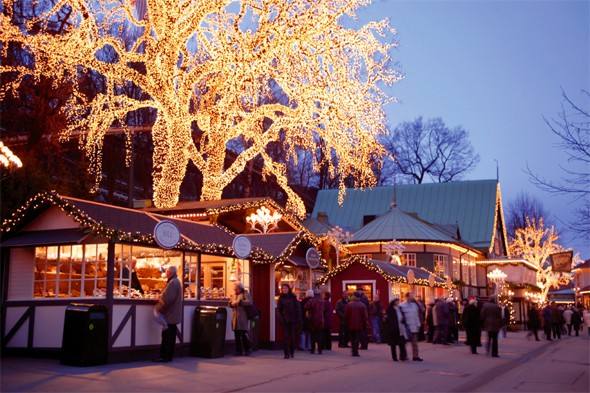
In the 12th and 14th centuries, on the basis of economic development and population increase, the urban and rural market system of a pre-modern society was taking shape in Britain. From the perspective of macro allocation, this market system is basically composed of rural markets, small towns and large and medium-sized cities. Medieval scholars mas, according to the UK at the time of the HuQu rolls, tithe and other personal property tax records, such as to arrange them to write down the city market, according to the wealth and the accumulation of commodities, the 13th century the British market is divided into three levels: the first level is the regional trade city market, in Britain at that time a total of 51, the most is the capital of the county and important port, such as Oxford, coventry, york, Yarmouth, Gordon season, etc.; The second level is the market in small cities, generally small scale; The third level is the rural market, the smallest. Maschel doesn't include London, in fact the total number of big cities is 52. In this hierarchical market structure, London is at the top of the pyramid.
To determine the structure of the market it is necessary to know the total number of different levels of markets. Generally speaking, each city has at least one market, which is usually open one to several times a week. The larger the city, the more frequently it opens. The number of large cities was stable in the market system and did not change quantitatively in the late middle ages. According to dale, an authority on medieval history, the number of big cities in late medieval Britain was always 52, mostly large cities and port cities. In addition, according to dale, the total number of small cities in England from 1270 to 1540 was 667. Most of them were founded before 1270, and only a few developed after 1300. In the middle and late medieval urban system the number of small and medium-sized cities remained around 600. It can be inferred that in the whole late medieval period, the urban market basically maintained at the size of 650, namely 52 big city markets and 600 small city markets.
The number of rural markets is difficult to calculate, and there are no exact figures. Scholars' estimates of rural markets tend to work out the total number of markets indirectly based on the number of market charters issued by the royal family, and then subtract the number of urban markets. There were about 2,800 market charters issued by the king from 1198-1483, of which only a few hundred were issued in the 14th and 15th centuries. However, the number of licences does not equal the number of actual markets. The medieval historian britnell made a solid study of the number of markets in parts of England before the black death. Brittner's research shows that by 1350 there were 1,003 markets in 21 counties in England. If the rest of the 18 counties had a similar density, the total number would not be more than 2,000. And some markets are ephemeral, so the number of simultaneous markets before the black death was less than 2, 000. Excluding 650 urban markets, there are fewer than 1,300 rural ones. Therefore, before the black death, the British market structure was dominated by the rural market, which was more than 60%.
The decline in population after the black death certainly had an effect on the number of markets. In the middle ages, England's population peaked in 1300, with 5 to 6 million people. The outbreak of the black death in 1349 and subsequent regional diseases kept the population low for a long time. Hatcher argues that for the next century and a half after 1377, Britain's population declined to varying degrees. It was 2.5 to 3 million in 1377, and 2 to 2.5 million in the mid-15th century.
One of the first scholars to look at the number of British markets was Alfred, who thought there were 760 market towns in early modern England. Market towns here are equivalent to small and medium-sized cities. Based on Avery's research, brittner studied the continuity of the market established before 1350 in 21 counties of England, and the results showed that there were 1,003 markets in 21 counties of England in 1349, and only 362 markets survived in 1600, and the market survival rate was only 36%. Due to the lack of accurate local studies, it is difficult to estimate the number and proportion of the disappearance of each market. Essex, for example, had 20 markets listed on the county's books that attracted royal buyers in the mid-14th century and six that no longer counted as markets by the 16th century. In the west midlands and lincolnshire, for example, village markets lost half and 60% of their value in the 16th century, respectively, while towns remained almost intact. Mavis looked at the rise and fall of markets in the three counties of south-east England during the middle ages. Of the 162 markets in 1,348, 50 survived, with a survival rate of 31 per cent, compared with 75 per cent in smaller cities.
Although there was also a significant decline in the urban population in the late middle ages, there was no significant change in the number of urban markets. Although some small cities disappeared, some villages became small cities, so the urban market remained around 650. In stark contrast, there has been a marked decline in the rural market. If the number of surviving markets had been close to 2,000 before the black death, it would have been around 700 by the late middle ages. Add in the hundreds of royal charters issued in the 14th and 15th centuries, and the total would have been between 800 and 1,000. Apart from 650 urban markets, there are fewer than 400 rural markets, and urban markets account for an overwhelming majority, especially those in small cities that account for more than 60 percent. At this point, the market structure of late medieval England completed the transformation.
The change of market structure in late medieval England was closely related to the change of population. The decrease of population leads to the change of market demand structure, and the change of market demand has great influence on the market structure. In addition, the prosperity of textile industry and its export expansion, the decline of international market and the improvement of transportation all have an impact on the market structure.
The decrease of population will inevitably lead to the decrease of demand for daily necessities. Throughout England there were many markets set up by lords, and after the black death many villages were completely abandoned, with more than 2,000 abandoned in England between 1370 and 1520. The reduction in the number of villages inevitably leads to the reduction of rural markets serving one or more villages.
The main body of the rural market is landless farmers and craftsmen, who cannot support themselves. The market is a strong guarantee for them to obtain survival materials. In 1250-1350 many landowners were chartered to set up markets that mostly met the needs of rural huts and small landowners. The sharp decline in population caused by the black death, especially the decline in the number of thatchers and wage laborers, reduced people's demand for food and raw materials. Research suggests that the proportion of this population has fallen from half to one-third. The main reason for this decline in the number of farmers and wage laborers was that the black death had reduced the population and thus the land supply was abundant. Many farmers and wage laborers regained their land and thus reduced the demand for basic living materials from the rural market.
In the late middle ages, the demand structure of rural society was changed due to the significant decrease of population, the increase of per capita resources and the general improvement of urban and rural living standards. As the food supply is more abundant than ever cheaper, demand elasticity of industrial products than grains, the elasticity of animal production and to stimulate the development of the textile industry, Salisbury, coventry, york, Gordon colchester in the late 14th century, the development of high quality wool production is not shipped abroad, the development of textile industry is at least partly reaction to rural residents rising demand for textiles. The development of leather industry is also worth mentioning. As per capita living standards improved, meat consumption increased greatly, which increased the supply of raw leather and stimulated the development of leather industry. In addition to textiles and leather, consumers also tend to buy cheaper specialty products such as badges, buckles and other accessories. These products are generally mass-produced professionally and affordable to both urban and rural populations, mainly for local markets.
The change in the structure of demand is also reflected in consumers' increasing preference for overseas imports, which include a variety of industrial goods from low-lying countries and southern Europe, as well as luxury goods such as fine textiles, silk, spices and jewelry. Import and export commodities generally have to go through the port city, and then transfer around. Britain's overseas trade developed greatly in the late middle ages, especially with the low countries. By the 15th century, imports had penetrated the interior on an unprecedented scale. Ceramics is a good example. The historical archaeologist astile sees the discovery of European ceramics from far inland as evidence of a dramatic change in the nature of markets in the late middle ages, a result of a greater integration of local, regional and international trade than in the past.
In the late middle ages, the industrial and commercial geography of England changed greatly, which was mainly reflected in two aspects. Second, the specialized industrial market has been expanded, the manufacturing process has become increasingly complex, and the domestic and foreign markets have been expanding.
In late medieval England, wool textile industry not only increased production, but also changed its geographical distribution, market and sales organization. Although the wool textile industry was widespread, from Devon to york and from westmoreland to Kent, it was increasingly concentrated in three regions: the west country, east Anglia and west reading. The river valleys in these areas are well supplied with water for rinsing and hydromilling, as well as nearby access to quality wool and bleached earth.
From the 1430s on, the relationship with Flanders deteriorated and Britain imposed a trade embargo on Flanders, which provided an opportunity for the development of the local wool industry. Wool was imported less and less, and more and more wool began to be supplied to the domestic market. After 1350, wool met the expanding overseas market, which prompted the wool industry to concentrate in certain towns and regions. 1350-1400 was the first important stage in the export of English woolen cloth. The main beneficiaries were old industrial cities such as coventry, Salisbury, york, Norwich and colchester. The main beneficiaries of the second phase from 1470 onwards were rural industry or small town industry in areas such as west Wiltshire and Devon. With the emergence of textile centers, demand for food and raw materials became more concentrated in a few commercial centers. Although markets generally declined after the black death, those near the textile industry flourished.
In addition to markets, markets were the place of trade in medieval England. The fair is a seasonal trade fair. Instead of selling daily necessities, the main products are livestock, wine, farm tools, wool, woollen and other luxuries. The size of the market is larger than the market, the duration is also long, mostly concentrated in the summer and autumn of each year.
There are three kinds of fairs. One is a huge international trade fair, and the second is a medium-sized fair. The third is the smaller market, the country market. In the middle ages, there were eight international markets in Britain, which formed the market circle. The eight markets were Boston, Stanford, st. ives, Winchester, kingsley, st. Edward, berry st. edmonds and northampton. They are held every year, but for several weeks, and every six months or every quarter. Unlike the city, the fair is not restricted to foreign merchants, so merchants from all over the country can participate in it. Moreover, they are engaged in both wholesale and retail business. Therefore, the participants are not only international merchants, but also local merchants and nearby residents. The golden age of international fairs was in the 12th and 13th centuries. With the decline of British wool exports and the rise of British merchants, the international market gradually declined. In the past, international markets gradually shifted to larger cities, especially London.
Take wool exports. Wool was a major British export until the middle of the 14th century. The wool trade mostly bypassed the urban market and was mostly controlled by foreigners. It was directly traded with producers or bought in large quantities in the market. But from the 1430s, woolen production developed rapidly, and wool was gradually used for domestic processing rather than export. At first, the wool trade did not take place in cities. It was usually sold by the producers to the British merchants and then to the woolen fabric manufacturing center, which meant that the wool trade destinations were increasingly concentrated in cities. In the late fifteenth century some English cities depended on the sale of wool for their economy. Take the townshend estate in Norfolk as an example. In 1495, 120 stone wool was shipped to Hadley and 360 stone to ravenham, both famous textile cities or villages in Suffolk. Sales of other luxury goods such as wine, wool, woolen goods and other goods were also concentrated in the larger cities, especially London, where the urban market became more important.
In the past, people thought that the transportation in the middle ages was backward. Recent studies have shown that the land transportation in the middle ages had a great improvement. For example, horses replaced cattle as the main driving force in the 12th and 13th centuries, and horse-drawn wagons were common in the 14th century. The cost of land transport was quite low, and full-time transporters appeared. In addition, many Bridges were built during the middle ages. In the 14th century, a road network centered on London was formed, which basically covered the whole of England. All these indicate that the transportation condition in the middle ages was better than previously thought.
The consumption capacity of each social class is closely related to its transportation capacity. A Lord who earns more than 1,000 a year generally spends his money in London, regional capitals, and major ports. For example, Richard mitford, bishop of Salisbury, spent 143 pounds in 1406/7. Wine, fish, spices and imported iron cost 56, or 39%, in Bristol, Southampton and Salisbury. Local consumption is less than 20%. Those earning between 200 and 400 a year are in the second tier. This social class is not generally economically connected to London, and large purchases go to regional capitals or ports closer to home, such as coventry, Bristol, etc., which are much closer to the smaller local cities than to the first estate. Squires and priests, earning less than 100 a year, operated in small cities. Not only the upper class of society has the ability to carry out a large distance space displacement, even the general public has a certain ability to transport. Rich farmers who owned land over fifteen acres had their own horses and carriages. In the 15th century many farmers had horses. It was easy to borrow even without a horse or carriage. Because farmers had horses and wagons, they could carry their goods to distant markets where prices were higher, where they could buy a wider variety of cheaper goods. In this way, farmers do not consume and sell nearby, and the small rural market that mainly serves farmers in surrounding villages inevitably declines, and its service function is replaced by the small surrounding cities.
51due留学教育原创版权郑重声明:原创assignment代写范文源自编辑创作,未经官方许可,网站谢绝转载。对于侵权行为,未经同意的情况下,51Due有权追究法律责任。主要业务有assignment代写、essay代写、paper代写服务。
51due为留学生提供最好的assignment代写服务,亲们可以进入主页了解和获取更多assignment代写范文 提供北美作业代写服务,详情可以咨询我们的客服QQ:800020041。