
服务承诺
 资金托管
原创保证
实力保障
24小时客服
使命必达
资金托管
原创保证
实力保障
24小时客服
使命必达
51Due提供Essay,Paper,Report,Assignment等学科作业的代写与辅导,同时涵盖Personal Statement,转学申请等留学文书代写。
 51Due将让你达成学业目标51Due将让你达成学业目标51Due将让你达成学业目标51Due将让你达成学业目标
私人订制你的未来职场 世界名企,高端行业岗位等 在新的起点上实现更高水平的发展
 积累工作经验
 多元化文化交流
 专业实操技能
 建立人际资源圈
Nietzsche's Thought of historical philosophy
2019-04-19 来源: 51due教员组 类别: Paper范文
下面为大家整理一篇优秀的paper代写范文- Nietzsche's Thought of historical philosophy,供大家参考学习,这篇论文讨论了尼采的历史哲学思想。尼采认为历史的价值在于促进现实的个体生命的成长,人需要历史,但过量的历史会损害生活。历史对于三种人是必需的,同时历史也有三种形式。后来尼采提出了永恒轮回的思想,认为世界历史就是权力意志的永恒轮回。在个人的历史作用的问题上,尼采鼓吹杰出个人的作用。尼采的历史观主要涉及历史评价问题,在很大程度上是一种历史价值论。
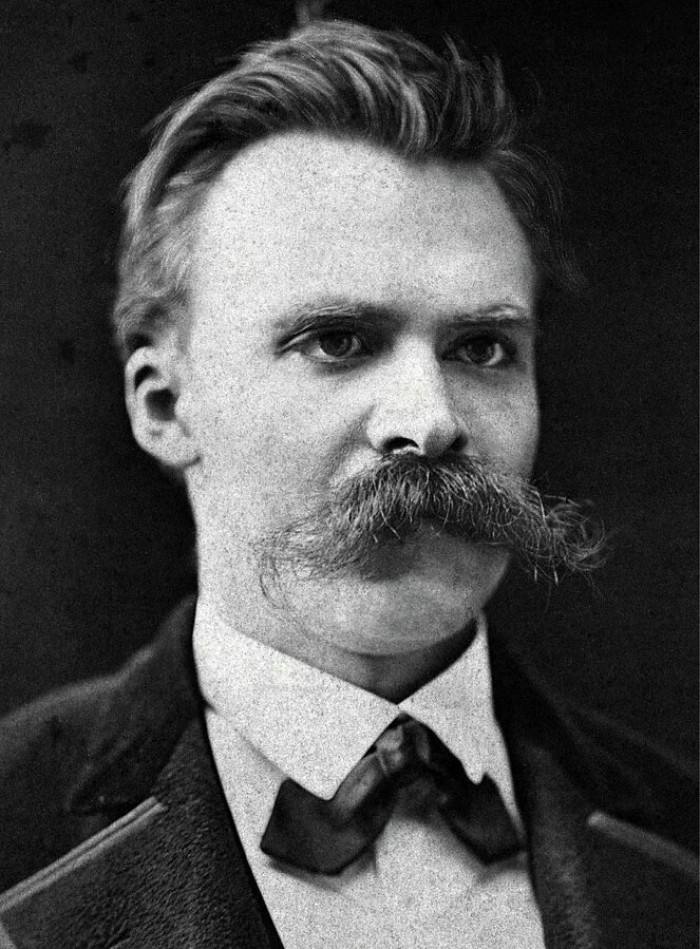
Nietzsche believes that the value of history is to promote the growth of real individual life, people need history, but excessive history will damage life. History is necessary for three of people, and there are three of different forms of history. Later, Nietzsche put forward the idea of eternal reincarnation, that the world history is the eternal reincarnation of power will. On the issue of the role of individual history, Nietzsche advocated the role of outstanding individuals. Nietzsche's view of history mainly involves the issue of historical evaluation, which is a kind of historical value theory to a great extent.
This paper analyzes the important part of Nietzsche's philosophy Thought and ―― historical philosophy. He devoted his whole life to historical issues, taking the meaning of life as the object of historical consciousness, focusing on his own time and consciously devoting himself to a certain historical moment to grasp in order to understand what is the key in today.
Nietzsche's early philosophy of history focuses on the use and misuse of history, which mainly discusses the value of history and the problem of worthless, that is, the standard of historical value. One of the basic ideas that runs through it is: history is not a pure knowledge and pure science, and history is not an educational factor that gives strength to people; history should serve life; only from the perspective of life can we cross-examine the value and worthless of history, and only those who already know how to live and prepare well for their actions need history. Therefore, history is a desire for life, for action and for the service of life, not for intellectual desire. If the history is excessively respected and the life and life shrink, then the relationship between life and history is reversed, the life is the purpose, the history is the means, and the history is the Service of life and life, not the contrary. Nietzsche's criterion for judging the pros and cons of history is clear, which is to see if it is beneficial to the growth of real individual life.
On the basis of this basic point of view, Nietzsche believes that people not only eat, drink, pull, sprinkle, sleep, day and night, day after day, but also "busy their little bit of hate and the grace of the moment, neither feel melancholy, nor feel bored." Compared with the history of animals, people always have to trace their past, "can not learn to forget, but always nostalgia for the past." The essence of human being distinguishes from the animal, it is made by history, unconscious traditional custom and conscious recollection: the animal lives in the present, is dominated by the life instinct, but the person lives in the time series, in the past and the future constructs own life significance. Without history, one cannot be human. People are always in the new form to grasp the past and reject the past, people know that they have the future. Therefore, people need history so that people can take the great things that they might do, and give them the courage to act now, to gain their substantial sublimation, to be comforted when they are discouraged, to have history in order to be aware of their origins with a heart of love and piety; In order to overcome the past by the rich driving force of their own lives. and the task of history seems to be to take all of the past as an indispensable human ', without missing the body of their own not strong, and they think that this is to inherit the historical heritage. As a result, the past became a heavy burden for mankind. But people do not think so, they feel that they are happy. In fact, the heavy load of history has made them lose themselves in life, people exist in the present, but live in the past. But people do not know this, always with greedy eyes to search history, as if history is the Paradise Lost people. Because of this, the human life is very difficult, heavy history pressure people to breathe.
In this regard, Nietzsche thought that people need history, even must live in history, but if the recollection of history endangers the life will of the people, then this history will become a human "poison", must be cleared in time. An excess of history can lead to a recession, a man without the courage to begin, the history of knowledge surplus is the enemy of the Times life, and damage to life: first of all, it weakens the personality of people, because the sense of history has become a kind of performing art, that is, sometimes assumed to have any kind of That the person who only understands the past has a lack of essence in the form of a drama and is out of touch with the actual reality of the man. Secondly, history causes people to think that they have attained objectivity and impartiality, but the result is that history destroys human instinct, and it believes that human beings have aged, brought about imitation feelings, only realize their nothingness, the degeneration of all things, leaving some kind of ironic flavor. Third, people form a bad belief that we are the survivors and followers of the ancient times, that we have to think about the rare morals and justice of other times, that the national instinct is thwarted, that the individual matures and the whole matures alike; The times fall into a dangerous cynical state, and followed by a more dangerous tendency to cynicism. Excessive history deprives people of the value of historical remembrance through these channels, as a result of history, people in the magnificent history of only to know the great figures, people without a pious heart in the archaeological history of the past, also needlessly in the critical history of the past to judge the things.
In order to treat the damage caused by the surplus of history, Nietzsche put forward "non-historical" and "Super historical" view. In his view, the so-called "non-history" refers to "the power and skill that can be forgotten, and the power and skill to put oneself in a finite situation", that is, to be able to forget and to shut itself down in a limited horizon. If history is the memory of the past, "non-historical" is the elimination of historical memories, and constantly remove and dilute the history of our minds "chronic disease." In "Non-history", we must learn to reasonably forget that anything that endangers people's vitality and creativity should be discarded. The so-called "hyper-history" refers to "the power to turn the eye to the creation and endow it with something monumental, that is, to the art and religion." This "hyper-historical" view goes beyond the isolated individual's historical memory, which is free from one-dimensional irreversible time flow and ultimately crosses the boundaries inherent in man and animal, morality and nature. In Nietzsche's view, this history is the true history ―― a kind of life history and world history beyond people. "Super history" also means to start from now on, always regard the present as the starting point and destination of life. Acquiring a "hyper-historical" vision requires such a condition that it can get rid of the compulsion of things in the past and develop a second instinct of self-confidence, which may result in a decomposable product from this understanding.
from Nietzsche's Point of view, we can see that history is the necessity of life, this is the value of history, the history of human beings can not be reduced to ignorance, only to surpass other animals and become human beings, but if the person becomes the eternal memory, the past has been firmly in mind, that he is not a non-historical, can not forget what happened, He may be completely deprived of his ability to live. To a certain extent, forgetting is a force of life, is the expression of vitality. Therefore, in order to make human beings truly happy, we need to forget the power, that is, throughout the entire history of the whole process to feel the history of the ability, or the need for people to be proud of the historical burden of the appropriate trade-offs. Because, "a person, if can not at the threshold of the moment to forget themselves and forgotten the past, not like a goddess of victory in a single point without feeling fear and vertigo, he will never know what happiness is, and worse, he will never make others happy." "Man needs history and forgets." Forgetting is a feature of all actions, just as the survival of all organic matter requires the sun as well as darkness. People can live without memory, can almost without memory, such life is actually also happy, but the life without forgetting is absolutely impossible. Therefore, "whether it is a person, a nation, or a cultural system, if you do not sleep, or rumination, or its ' sense of history ' to a certain extent, it will hurt and ultimately destroy the life of things." The deeper the root of a man's inner nature, the better he can absorb the past. And the greatest and most powerful nature is to grow too fast and harmful because of the lack of a sense of history. But without history, people will live like animals. Therefore, one must know when to forget, when to remember, and instinctively see when the history of the feeling, when it is not historical to feel, human beings in the history of life, but also must live in the non-history. Non-history and history are also essential to the health of a person, a nation, a culture. Nietzsche believes that history is necessary for those who live, and it belongs to three kinds of people: Those who act, work and struggle, and those who maintain and respect the past; accordingly, there are three forms of history: The History of Remembrance, the history of nostalgia, and the history of criticism.
The history of remembrance belongs to those who have the action and the strength, the hard work, the struggle, the great battle, the role model, the teacher and the comforter, but they cannot find them in the same generation. In Nietzsche's view, the contemporary people have been civilized by the mediocrity of the lazy, they can not become what the all-powerful figure. But the history of heroes are everywhere, because the creation of history is those heroes, great men, their legendary experience for the contemporary people with lofty ideals to provide reference. So they tried to find such great people in their past history. For them, history is made up of great legends and great moments of personal struggle, and history inspires them to believe that things that have happened in the past may happen again, they look to the great men of the past, to observe their greatness, to gain courage and strength from which to carve their way. However, this historical form is extremely apt to incur evils. For this form is often used in ancient times to think that what has happened in the past will be reproduced in a changed environment, but history does not tell us whether today's greatness is possible; this historical form sets a great example of the past, which will hinder the emergence of the great example of the present, the egoism and the fanatic, Lazy and incompetent will use history to hinder the efforts and actions of great men.
Nostalgic history belongs to those who "have a conservative and pious nature", who are devout and love life. They cherish the legacy of the past, carefully protect their own conditions of survival, patiently pursue the almost completely erased the details, and do their best to understand them, and correct understanding of them. History can make them look for the roots of survival in their memories, the love and belief, and make people grateful for life. They take themselves as a link in the chain of life, carefully clasped the legacy left by the predecessors, good protection, and then solemnly to pass it on to posterity, to achieve the life of a sacred link. A man, no matter what position he is in reality, how embarrassing the situation, as long as he stood in front of the magnificent historical monuments, or access to the history of books, he will have a sense of integration with the history, and because of the history of the sentiment and the heart of some kind of pride, glory and happiness. However, for the past things to maintain a pure love attitude, will play a negative reaction with life. Nostalgic history evokes the pious heart of ancient things, and makes people lose their desire to act, which is difficult to adapt to the present life. Because its function is to maintain the past, not to promote real life, not to spur people to the future.
The history of criticism is mainly for the service of life, which belongs to those who suffer and yearn for liberation. For the sake of the present, these people destroy the past, dissolve the past, strengthen their criticisms of the past, and make their due judgments about the past so that they can correct the mistakes of the past. For them, any past can be condemned, because "the world always contains a lot of human rights and human frailty." The presiding judge is neither righteous nor merciful, but "only life itself". Such trials are harsh and unjust. This historical form of criticism can cause a sad feeling and is dangerous to life. "Because we are only the offspring of our ancestors, and we are the product of our mistakes, passions and sins, we cannot get rid of this chain." "In this way, people have to live in the constant tension between the old and the new, and not only that, because this historical form has been used for the present, it will negate everything in the past and destroy the foundation of existence."
According to the advantages and disadvantages of life and life, Nietzsche analyzed three kinds of history. He believes that any person, any nation will be based on their own different purposes, strengths and needs, the value of the history of their own assessment, or need to commemorate the history, or the need for nostalgia history, or the need for a critical history. All times people need history not only to satisfy their thirst for knowledge, nor to weaken the present, to eradicate the future, but to survive, in order to enrich the present and connect the future.
51due留学教育原创版权郑重声明:原创paper代写范文源自编辑创作,未经官方许可,网站谢绝转载。对于侵权行为,未经同意的情况下,51Due有权追究法律责任。主要业务有essay代写、assignment代写、paper代写服务。
51due为留学生提供最好的paper代写服务,亲们可以进入主页了解和获取更多paper代写范文 提供作业代写服务,详情可以咨询我们的客服QQ:800020041。