
服务承诺
 资金托管
原创保证
实力保障
24小时客服
使命必达
资金托管
原创保证
实力保障
24小时客服
使命必达
51Due提供Essay,Paper,Report,Assignment等学科作业的代写与辅导,同时涵盖Personal Statement,转学申请等留学文书代写。
 51Due将让你达成学业目标51Due将让你达成学业目标51Due将让你达成学业目标51Due将让你达成学业目标
私人订制你的未来职场 世界名企,高端行业岗位等 在新的起点上实现更高水平的发展
 积累工作经验
 多元化文化交流
 专业实操技能
 建立人际资源圈
Design thinking
2019-02-20 来源: 51due教员组 类别: Paper范文
下面为大家整理一篇优秀的paper代写范文- Design thinking,供大家参考学习,这篇论文讨论了设计思维。设计这一造物活动,从一开始就具有独特的创造价值,而思维在创造活动中一直扮演着重要角色。思维是创造价值发挥的载体,然而这一任务并非仅由创造性思维承担,而是发现性思维与创造性思维共同作用的结果。虽然二者共同作用,但是,这并不能抹杀他们各自的特点。在设计中,发现性思维与创造性思维的过程通常相互结合,在发现新规律、新事物、新现象的同时即为激发灵感产生新造物计划的开始。当两种或两种以上元素在大脑中得到反映的时候,设计师们就可以通过某些研究发现这些元素之间的规律,而在这个过程中,创造性思维就已经启动。
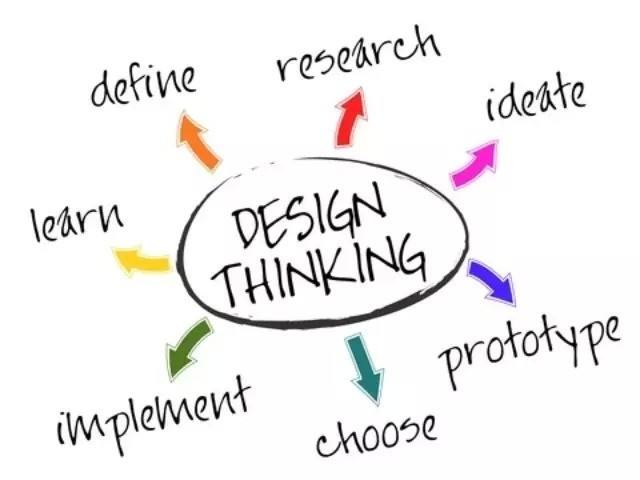
"Design" first appeared in the form of verbs. Mr. Zhang daoyi believes that "if interpreted literally, design is' imagine 'and' plan '". Although the word "design" has evolved as a noun for a variety of reasons, its connotations of "vision" and "plan" have not changed much, but they have been extended and applied more widely. Since there are assumptions and plans, the importance of thinking in design is self-evident. In general, "design is the sum of many creative thinking activities and creative operation practices involved in the two-way process of human creating and serving products". Therefore, exploring the design thinking and its application becomes the key to study the scientific nature of design.
Thinking, like feeling and perception, is the reflection of human brain to the objective reality. Different is, the feeling and the perception are to the objective reality direct reflection, what it reflects is the objective thing external characteristic and the external relations; Thinking is an indirect and general characteristic reflection of objective things, which reflects the common and essential characteristics and internal relations of objective things. In the design process, sensation and perception can only reflect the general characteristics of the shape, color, size and smell of the design object or element, while design thinking can comprehensively summarize the common essential characteristics of a kind of design object or element through a series of thinking processes, and discard the specific non-essential characteristics.
Thinking is the basis of the process of synthetic imagination, which can be regarded as the process of consciously transforming or synthesizing one or more existing information elements into a new concept. An element can be any unit of information, for example, an event, a step, an idea, etc. In essence, all items with new attributes, new things are other things deformation or integration. Any new creation must be based on existing raw materials.
"Design", a creative activity, has its unique value from the very beginning. Thinking has always played an important role in creative activities. Thinking is the carrier of creating value. However, this task is not only undertaken by creative thinking, but also the result of the joint action of discovery thinking and creative thinking. Although they work together, this does not obliterate their respective characteristics. Therefore, the distinction between creation and discovery must first be made clear. The former is through a series of complex processes, the creation of unprecedented new things, focusing on means to come up with new methods, establish new theories, make new achievements or things; While the latter is to observe or find things or laws that are not observed or recognized through research and exploration, focusing on the recognition of things that already exist but have only been perceived in recent years.
In design, the process of discovery thinking and creative thinking is usually combined with each other, and the discovery of new laws, new things and new phenomena is the beginning of inspiring new creation plans. When two or more elements are reflected in the brain, designers can discover patterns between them through certain studies, and in the process, creative thinking may be initiated.
Ancient philosophers have long regarded imagination as a psychological mechanism through which humans learn about themselves. Hegel once said: "when it comes to ability, the most outstanding artistic ability is imagination. Psychology usually holds that "imagination is the mental process of the brain to process stored images and transform them into new images". For example, reading that "thousands of birds fly away, thousands of people disappeared. Boat SuoLiWeng, like snow "fishing alone, will emerge in the mind of a picture, have vision, have close shot, a landscape, character, move have static, in a static dynamic, remote, quiet cold quiet, between heaven and earth completely enveloped by glistening snow, birds, wild, forming the unique artistic conception.
Imagination is the basis of thinking, which can be divided into two main types: re-imagination and creative imagination. Reimagination is "the process of forming new images in the mind according to the description of language or the schematic of patterns". Creative imagination is "the process of creating new images independently of existing descriptions". In general, the use of more thinking is to create imagination. Especially when designers design works, creative imagination plays a main role.
Like other thinking processes, the thinking process of designers in the design process can be divided into the following four stages:
The first stage is to recognize the problem and ask the question clearly. The initial thought process starts with problem solving. Problems are contradictions, and the process of finding problems is the process of discovering contradictions. Finding out the essence of the problem and grasping the core become the main purpose of this stage. "Finding the problem is the starting point of solving the problem, and also a driving force in the process of solving the problem. For example, design behavior may raise questions about the intention of designing a product at the very beginning, because design is a kind of artistic creation activity with practical and utilitarian value, so it must take place under the guidance of a certain purpose. Making clear the design intention points out the direction for carrying out practical operation and solving problems concretely. Only when the design intention is clearly defined and contradictions to be solved are found, it is possible for designers to analyze, compare, abstract, concrete, summarize and synthesize existing elements. At this stage, design thinking needs to rely on the following three conditions:
The more active the designer is, the wider his contact area will be, and the more problems he can find and put forward. That is to say, the designer should accumulate more knowledge, collect more materials and observe more things in daily life.
The desire for knowledge will encourage designers to seek more knowledge to apply to their design ideas or works.
The designer's experiential knowledge is inevitably related to the final result of the design work. Lack of knowledge is not easy to raise complex problems, not grasp the main contradiction of the problem, the design work is also bound to have no depth, plain. And the deeper you drill, the more you understand, the deeper and more important the questions you ask. For example, some advertising posters, often a few words or a few graphics can reflect a certain problem of society.
The main feature of this stage is to collect materials, information and other elements related to the problem. Without this process, the problem cannot be solved and the design cannot continue. For example, in the design of a commercial product, the designer should obtain information elements related to customers, target market, brand and so on, and also study a large number of similar products, and then deal with a series of correct elements, and combine with the characteristics of other elements. This stage requires visual and structural problem analysis with graphics and symbols, as well as a clear understanding of what concepts are used to organize problems.
The key to solving the problem is to find out the solution, that is, the principle, approach and method of solving the problem, which requires the hypothesis. Hypothesis is the scout of scientific design thinking and plays an important role in cognition. "" as long as the natural sciences are thinking this way, its development form is hypothetical," "Engels said. Although design is not a pure form of science, it is an organic combination of science and art. Therefore, it is a feasible method to propose hypotheses. In general, the designer will be basically established by the organic induction of multiple elements, in the brain in the form of a hypothesis for the synthesis. This assumption can be open and pluralistic, not definitive.
Testing assumptions is the final stage of design thinking. Practice is the criterion for testing truth. In the design field, if the feedback and actual operation prove to be feasible, then the hypothesis is correct; Otherwise, if the hypothesis is wrong, we need to find new methods and new ways to reintroduce the hypothesis.
In a word, designers should try to exert their imagination and creativity at any stage, make use of all available existing elements, and look for all possible opportunities to conform to the design purpose and requirements.
To sum up, design thinking plays an important role in thinking and implementation. In the process of creation, designers should not only perceive objective things and analyze existing elements, but also grasp the essence and rules of elements through a series of thinking processes. Not good at using design thinking is not easy to play a creative ability, in the design is not easy to deal with a variety of topics. Therefore, under reasonable conditions, efforts should be made to cultivate the ability of design thinking, so that it can effectively master the new point of view, new Angle to think about the problem, get rid of the bias of scientific design methods.
51due留学教育原创版权郑重声明:原创paper代写范文源自编辑创作,未经官方许可,网站谢绝转载。对于侵权行为,未经同意的情况下,51Due有权追究法律责任。主要业务有essay代写、assignment代写、paper代写服务。
51due为留学生提供最好的paper代写服务,亲们可以进入主页了解和获取更多paper代写范文 提供作业代写服务,详情可以咨询我们的客服QQ:800020041。