
服务承诺
 资金托管
原创保证
实力保障
24小时客服
使命必达
资金托管
原创保证
实力保障
24小时客服
使命必达
51Due提供Essay,Paper,Report,Assignment等学科作业的代写与辅导,同时涵盖Personal Statement,转学申请等留学文书代写。
 51Due将让你达成学业目标51Due将让你达成学业目标51Due将让你达成学业目标51Due将让你达成学业目标
私人订制你的未来职场 世界名企,高端行业岗位等 在新的起点上实现更高水平的发展
 积累工作经验
 多元化文化交流
 专业实操技能
 建立人际资源圈
留学生作业代写:The legal system of Islamic countries
2017-08-09 来源: 51due教员组 类别: Paper范文
下面为大家整理一篇优秀的paper代写范文- The legal system of Islamic countries,供大家参考学习,这篇论文讨论了伊斯兰国家的法律体系。伊斯兰法是一种自治宗教的法律体系,其基本内容主要基于《古兰经》。伊斯兰教法是一种法律框架,它用来监管人们的生活,而穆斯林是一个神权国家,所以教法就是法律本身。如今,伊斯兰法律已是世界上三大最重要的法律制度之一。
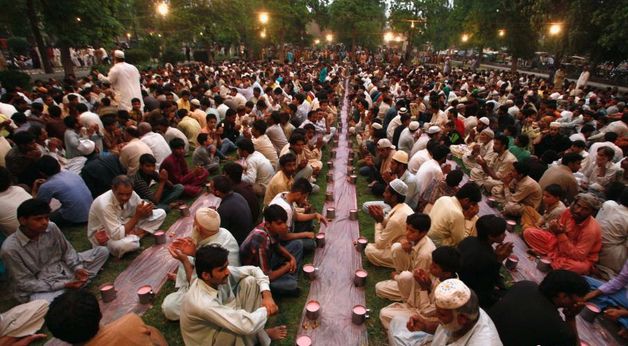
The Islamic law is an autonomous religious system of law which is based mainly on the Koran. Here, one can see one of the most important points related with this law: there is a difference between the Islamic law and the positive right of a country in which most of the population follows this religion. In fact, a double jurisdiction exists in countries under Islamic law.
“Sharia” is an Arabic word which means “way” or “path” and is a term describing the way that every Muslim person must follow. This term is in fact what they call the Islamic law. This word could be applied to every religious system. In modern times, sharia has been related with the Muslim world, but it also applies to Judaism and the Torah, or Catholicism and the Ten Commandments. Sharia is thus the legal framework in which life is regulated. Muslim states are theocratic, so this text is law itself.
Nowadays, Islamic Law is one of the three most important legal systems, the other two being the French group (roman or civil law) and the common law group.
Within the last 50 or 60 years, states were founded within the Arabic world, especially after the Second World War when most of the borders were set by foreign countries.
In most of these states a jurisdiction problem exists between the Islamic law (connected with the religion) and the ability of the state to make its own positive law. Due to this dichotomy, over the years various states have approached this problem in different ways, to the extreme: from the Taliban in Afghanistan to Turkey, which is striving to attain a western legal system. In the middle, one can find as many answers to this dichotomy as Muslim countries exist.
One important and unique principle of this legal system is that the state can create new laws only in the fields which Allah had not revealed. Thus, the law is tied directly to the Muslim faith and only Muslims can be charged within this legal framework. Due to this principle, a problem emerges for the governments which have non-Muslims living in their jurisdiction because the religious law could not be applied to them. It is because of this issue that in many countries both public and private law were set together in a new fashion so that it could be applied to the entire population, even to non Muslims.
According to Muslims, Sharia is founded on the teachings of Allah and sayings of Muhhamad as founded in the Quran and Sunnah. However it is necessary to know how the Arabic world was before the IV century when Muhhamad makes his appearance around the year 570 or 580 BC.
This old world did not know a central political organization but tribes which were composed by relatives. Each tribe had a tribal leader and everybody reported directly to him. Most of these tribes had a nomadic lifestyle but others settled down and gave origin to different cities. Although they did not have a community sense, every tribe could recognize a common historical beginning, a culture in which they based their beliefs or religion; they were polytheists. Because of this origin, leaders agreed in depositing some objects which represented their worship and adoration in the same place. They built a cuboidal black house in the important city of Mecca: The Kaaba which would become the most sacred place of the Islam. Every tribe made a pilgrimage each year to this place to adore the Kaaba, which is now a ritual taken literally for Muslims.
Around the year 570 or 580 BC the family in charge of watching over the Kaaba had a kid who would be known as Muhammad. This man at the age of 12 took part in a typical caravan among tribes, cities, etc, which allowed him to have contact with Arabs, Jews, Catholics and so on. Back in his home city Muhammad, around the age of 40, claimed that Allah had revealed to him the last and definitive laws for the people. It wouldn't be either a break nor a rejection of the Old and the New Testament but the last one. This new religion was called ISLAM which means “to be a believer” and so far means Muslim.
It took time to get the message across to people. Many people, especially the rich of Mecca, did not believe in it, so they pushed away Muhammad and his followers from Mecca. This prosecution of Muhammad came to be known as Hegira and this moment would be taken by Islam as the year 0 later on.
Because of this rejection, Muhammad and his followers travelled through the desert till finally they were accepted in a city which would be called Medina (Today Saudi Arabia), which means City of the Prophet. After Muhammad was accepted in Medina, he and his followers began to convert the people of Medina to follow his religion, changing the society by implementing a more centralized process.
As long as Muhammad gave his message orally, there was no code or law which contained it. Due to this, the closest and wisest people started to write down what the Prophet had said, and this is what is known as the QURAN.
Another problem which appeared at this time was the issue of succession because he had recognized no leader. This problem led to the division of the Islamic world into different schools of thought, which is a division that exists to this day. The most important schools were:
Shiites and Sunnis
These schools of thought are the most important ones within the Islamic world. The number of followers of each one and the distribution among the countries is hard to define. The background of this division is given by Muhammad's death in 632. Since there were no instructions left for his succession, these schools took choose different ways to follow, which are still held nowadays. Over the years the relation between them has been marked by cooperation and conflict.
“Sunnis” is a world which comes from Sunnah or Prophet's behaviour, which is the second source of Islamic law. Thus, this is why they are more conservative. This school of law held that Muhammad's successor should be elected by the community as the Quran says and so far, the leaders of the community proposed Abu Bakr as the successor and with the support of other groups, this caliph took the leadership of the Islamic community.
On the other side, Shiites kept claiming their candidate who was Ali, Muhammad's cousin., was the appropriate successor. They held that the Prophet had chosen Ali as his successor when he was still alive. Ali was a leader in battle and often entrusted with command. Muhammad left him in charge of Medina when leaving to convert Mecca.
The Islamic law is based completely on the Quran, and so is Muslim society. The Quran is the holy book of Islam and it contains every revelation which Allah has given to Muhammad, the last prophet. For Muslims, it has all the wisdom of the universe, not only in the legal aspect but in every aspect of the life. Muslims must have a total submission to it.
The Quran is not a code itself because its legal requirements are not enough to be considered a real code. Additionally, some of the fundamental institutions of Islam do not appear in it. It regulates people's lives and their relationships between themselves and with god. Furthermore, a judge of one of these countries is not obligated to interpret it but he must refer to the doctors who have studied and interpreted it before. In addition, the judge may not interpret the Quran but the actions of the person.
In its legal parts, which is less than 10 percent of it, the Quran is not really a tidy and systematic code but almost impossible to understand if one does not have enough knowledge. It does have some dispositions about criminal law, civil law, etc. It contains also the punishment for murderers, traitors, Islam's enemies and adulterers.
Because the Quran was revealed in a relatively short period, the small population which was following it had to deal with new situations as this religion grew. In controversial cases, it was necessary to have a look in complementary sources. The Sunnah is one of these sources. It is the prophet's tradition, his words, actions and silence. It is part of the Sharia as the second source behind the Quran. In this way, when facing a legal situation without answer in the Quran, judges must interpret prophet's actions, sayings, tacit consent and acknowledgement of activities and statements. The justification can be found in the Quran when it commands every Muslim to follow Muhammad as an example.
This source was the cause of the division between Muslims due to the fact that Shiites followed the interpretation made by Ali who was called Muhammad's successor, and Sunnis did not take this interpretation and accepted others as well.
51due留学教育原创版权郑重声明:原创paper代写范文源自编辑创作,未经官方许可,网站谢绝转载。对于侵权行为,未经同意的情况下,51Due有权追究法律责任。主要业务有essay代写、assignment代写、paper代写服务。
51due为留学生提供最好的paper代写服务,亲们可以进入主页了解和获取更多,paper代写范文 提供美国作业代写服务,详情可以咨询我们的客服QQ:800020041。-ZR