
服务承诺
 资金托管
原创保证
实力保障
24小时客服
使命必达
资金托管
原创保证
实力保障
24小时客服
使命必达
51Due提供Essay,Paper,Report,Assignment等学科作业的代写与辅导,同时涵盖Personal Statement,转学申请等留学文书代写。
 51Due将让你达成学业目标51Due将让你达成学业目标51Due将让你达成学业目标51Due将让你达成学业目标
私人订制你的未来职场 世界名企,高端行业岗位等 在新的起点上实现更高水平的发展
 积累工作经验
 多元化文化交流
 专业实操技能
 建立人际资源圈
The budding of the British cabinet system in modern times
2019-03-28 来源: 51due教员组 类别: Essay范文
下面为大家整理一篇优秀的essay代写范文- The budding of the British cabinet system in modern times,供大家参考学习,这篇论文讨论了英国近代内阁制的萌芽。英国内阁的萌芽可以追溯到斯图亚特王朝时期乃至更久。都铎时期的枢密院和中古时期的政务会上,都显露出内阁的影子,但内阁制的形成却是在沃波尔时期,其特征是其以首席财政大臣的名义,取代国王主持内阁事务,为此他称为首相。但是,沃波尔于1742年的下午并没有导致内阁的全体辞职。1746年的集体辞职和二日内阁、1782年的诺斯请辞和随后年余内阁动荡,以及1 784年小皮特的内阁解散和重新举行大选,都说明了责任内阁制原则的持续发展。可因它们都具有偶发性特点,并屡受王权干扰,所以以集体负责为主要特征的责任内阁制尚未确立。
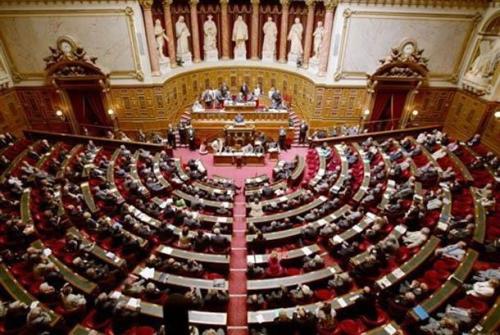
The roots of the British cabinet go back to the stuarts and beyond. The privy council in the Tudor period and the council in the middle ages both showed the cabinet garden, but the formation of the cabinet system was in the period of walboer, whose characteristic was that it replaced the king to preside over cabinet affairs in the name of chief minister of finance, for which he was called "prime minister". But Walpole did not lead to the resignation of the entire cabinet in the afternoon of 1742. The collective resignation in 1746 and the "cabinet of the second day", the resignation of George north in 1782 and the cabinet turmoil in the following years, as well as the dissolution and re-election of Peter jr. 's cabinet in 1784 all demonstrated the continuous development of the principle of the responsible cabinet system. However, due to their occasional characteristics and frequent interference by the royal power, the cabinet system of responsibility with collective responsibility as the main feature has not yet been established.
The predecessor of the British cabinet system, some people trace back to the privy council during the Tudor dynasty, and even the imperial council and council in the middle ages. The Tudor privy council already had some of the basic characteristics of a cabinet: it met behind closed doors in relatively fixed places, with no minutes. The Cabinet Council was first used by Francis Bacon in his collection of essays in 1605. The Cabinet is a Cabinet of Cabinet. But at the time, and for many years after, such backroom meetings were considered unconstitutional. In 1671, Charles ii's kabar became synonymous with the cabinet. It is composed of the first letters of the names of five ministers with bad political voices and has the meaning of a cabal.
However, in the British academic circle, a more popular view is to regard the decades after the glorious revolution as the budding period of the modern cabinet system.
William iii, the first constitutional monarch, always wanted to call the shots. But when, in the summer of 1690, he led the army to invade Ireland, and queen Mary found it difficult to hold the throne alone, a nine-member cabinet was set up to deal with the state.
After William iii ascended the throne, the party status and function as well as the relations between the two parties all changed. The question before William iii was: was it the whigs or the tories? One party or both? To that end, he repeatedly changed his approach.
In the coup of 1688, the whigs were more important than the tories. But that is not the case. At first, William iii tried to put together a bipartisan cabinet, trying to strengthen his hand by strengthening the weak. In the new government, danby was President of the privy council and halifax was chancellor of the seal. The ministers of state were Tory leader Nottingham and whig leader hirutsbury respectively, and some minor positions were filled by whigs.
There were other reasons for William's initial preference for the tories. It was the mediation of the tories that led to his marriage in 1677 to the mild-mannered Mary, which gave him some legitimacy for his future in Britain. Moreover, the tories are more respectful of the monarchy. Most of the whigs, on the other hand, wanted to limit the power of the king.
However, it backfired. The tories, mainly gentry landlords, were reluctant to support costly foreign wars. In the government to slow down, bungled the aircraft. It was not until 1694, when William iii again went abroad to wage war, that he changed his attitude and appointed whigs to form the first single-party cabinet, which actively supported the king's foreign war policy.
In the autumn of 1695, William returned and repeatedly presided over cabinet meetings. According to statistics, from October 1695 to October 1697, a total of 110 cabinet meetings were held, of which 57 were Kings. Fifty-three were small cabinet meetings without William, mostly dealing with minor technical matters such as coin changes and consular appointments. Cabinet plenary meetings are always held in the palace, the attendance is quite stable, about 10 people, usually including the Lord chancellor, two ministers of state, the court minister, the minister of the guard, the chancellor of the seal, the secretary of the navy, the governor of Ireland, the archbishop of Canterbury and so on.
Queen Anne loathed partisans more than William iii. In 1706, the whigs gained a parliamentary majority and were refused entry to the cabinet. She tried to banish party factions from the government and consolidate the monarchy.
Queen Anne tried to live up to her political convictions. Most of her early ministers were party - minded. In 1710, she listened to the anti-war tories, removed the whigs who did not want a truce, and appointed a Tory one-party cabinet. Some of the cabinet of William iii and queen Anne were the earliest party government in British history, which was the beginning of the direct participation of political parties in the national governance. Many in the ruling class have come to realise that a one-party cabinet is more efficient than a mixed one, and have turned it into a handy core of government. However, the composition of a one-party cabinet at this time has no definite and inevitable relationship with the partisan division in the parliament. When William iii formed the first whig single-party cabinet in 1694, the majority in parliament was the tories and their supporters. It was not until the next general election that the whigs became the majority party in parliament. It is easy to see that the whigs' victory in 1695 was not the cause of their formation, but the result. The historical fact that the cabinet was first organized and then approved by the voters shows that there was a cabinet without responsibility within the cabinet system at that time. Moreover, no cabinet since queen Anne has been directly elected by parliament.
Second, it was not often that a one-party cabinet was in place. Its composition was gradually changed by the intervention of the king. Some of the ministers resigned, others were deposed by the king, and the vacant posts were occupied by the tories and the royal family. By 1700, it was a mixed cabinet. Because this change is carried out slowly, it is not easy to be noticed. Moreover, some notable cabinet members were neither majority leader nor prime minister. Although individual ministers are given the titles of "first minister" and "prime minister", their role and influence are only slightly higher than those of other cabinet members.
In short, in the late 17th and early 18th centuries, when the king had the power to appoint and remove ministers according to personal preferences, there was no responsible cabinet in a two-party system. The cabinet system is in its infancy.
The formation of the British cabinet system is closely related to Walpole.
Robert Walpole was a famous British statesman in the early 18th century. He came from a squire family. He entered the house of Commons in 1701 and served as treasurer of the navy in 1708. He was imprisoned for having offended the Tory establishment.
In 1714, the Hanoverian dynasty was established. Walpole had a change of fortune. He was first minister of accounts in the government, then chancellor of the exchequer. At the same time he embarked on reforms to cut interest rates on the national debt and reduce the deficit. But its efforts were offset by the foreign policy of stanhope and sunderland, two of the king's and government's leading men. In desperation, Walpole resigned, along with his brother townsend, to join the government's opposition. In 1720, the great British stock scandal known as the south sea bubble brought down the government. Walpole returned to the cabinet to pick up the pieces, once again showing financial acumen. In 1721, he became chancellor of the exchequer and chancellor of the exchequer for the second time, taking full charge of the government. He became the longest-serving "prime minister" in British history.
In addition, by the 18th century, the ministry of finance had become the most important of all departments, the core of the national administration. Mainly for financial reasons, it is able to maintain frequent contact with other government departments and to supervise them financially. Because of this, the chief minister of the Treasury is also usually the most senior and prominent minister in charge at the ministerial level.
It is worth noting that Walpole was Britain's first prime minister without a name. He never called himself or was called prime minister on any formal occasion or on any formal document. His enemies were the only ones to accuse him of arrogance. The average term was one year and four months. Three of the other five prime ministers resigned, either directly or indirectly, under pressure from the king. Another whig prime minister, the marquis of rockingham, was removed by the king. Only Mr Bout's case stands apart from those of other prime ministers. He resigned in 1763 after being overruled by parliament, but continued to meddle in government affairs for the next two years, becoming a powerful backstage figure with no position. Not until 1770, when Lord north, the palace party stalwart derided as the "friend of the king", was appointed chancellor of the exchequer, did this succession of prime ministers come to an end, culminating in George iii's personal reign.
North served as head of the cabinet for 12 years. He did exactly what the king wanted him to do, escalating his repressive policies against the British north American colonies and provoking local resistance. After the north American revolution, the British suffered many defeats. At the end of 1781, the news of the surrender of the British army was announced, and a crisis arose. Opposition parties stepped up their criticism of the government, the cabinet lost its majority in parliament and north reluctantly called for it to leave office.
North's ouster also sparked a similar mass resignation. All but two of the original 13 cabinet members left the government together. The collapse of north's cabinet marked the fiasco of George iii's personal rule and the development of the principle of the responsible cabinet system. The marquis of rokingham, unjustly deposed by the king, returned to form a government for the second time after a 16-year absence.
From 1782 to 1783, successive cabinet changes resulted in a so-called constitutional crisis. At last, the king took advantage of the favorable opportunity to appoint Peter, 24 years old, as the chancellor of the exchequer to establish a new government.
When Peter junior became prime minister, the political situation remained unstable. Relying on the king's support, the younger Pitt creatively dissolved parliament and called a general election. The government won, and more than 100 opposition MPS were voted out and replaced by Peter jr.
From the departure of John north in March 1782 to the election of 1784, the government encountered five crises in less than two years, which was very important for the development of the British cabinet system in the 1860s. In 1782, when north stepped down, most of the cabinet members followed him, providing an example of collective cabinet resignation for later governments. In July of the same year, Richmond and others were condemned by the same party for failing to leave the cabinet together with the cabinet members, indicating that the concept of "collective responsibility" has been quite popular and deepened. The resignation of shelburne in 1783 was another political defeat for George iii, suggesting that the days of the king dismissing his cabinet and removing his prime minister against the wishes of a parliamentary majority were coming to an end. Although the coalition cabinet formed in April of the same year broke the party line, it reflected the principle of the responsible cabinet system to a certain extent because it obtained the support of the relative majority of the lower house. End of the same year, George again to recall the coalition, but this time is in the case of cabinet lost its parliamentary majority exercise recalled, and in 1766 he deposed rockin um cabinet is different, and he never ever regardless of the constitutional convention to recall any one of the prime minister, it illustrates the development of the switch.
Pitt in 1784 adopted the measures, from the parliamentary dissolution stipulated time is 3 years, it broke the assembly method for years - seven years act, constitutes a new constitutional convention: cabinet lost parliamentary majority support can not resign and dissolve parliament, a fresh election, or abandon the original parliament, voters directly obtained recognition and support. Because according to the interpretation of some jurists then and since, the mp is elected by the voters, should be the representative of the interests of the voters; the voters delegate their rights to the deputies and may take them back if necessary. If the government still lacks a majority in the new parliament, it should resign against the will of the electorate. If the government wins the general election, it shows that the original MPS do not support the government is wrong and against the will of the voters. In short, the manner in which Peter Jr. dissolved parliament in 1784 and held a new general election strengthened the cabinet's dependence on parliament and exerted a profound influence on the development of British political system.
The success of Peter's dissolution of parliament and the re-run of the general election did not mark the establishment of the British cabinet of responsibility. The main point is that this is only the first time in British history, so it is the creation, not the establishment, of a constitutional convention. Because from this point until the first parliamentary reform, after many elections and cabinet changes, none of the cabinet was established or destroyed.
In addition, although Peter has more power than any other British prime minister, he still cannot completely get rid of the control of the king. In 1785 he introduced a parliamentary reform bill that would expand the electorate and abolish corrupt constituencies. George iii objected, and Pitt shelved the bill. In 1801, he proposed to lift the ban on catholics politically. However, the king opposed his proposal and Peter was forced to resign. On the other hand, these historical facts illustrate the development of the British political system. Despite the continuous development of the principle of the cabinet system of responsibility, the relationship between the crown and the parliament, the cabinet and the parliament, and the cabinet and the crown is close to the state of balance of power, and the organizational level of political parties is still not high enough, so it has never reached the final establishment level.
Entering the 19th century, a new situation emerged. The earl of Liverpool served as prime minister for 15 consecutive years from 1812 to 1827, setting a record for the longest term among the "noble prime ministers". In the 18th century, some of the longest-serving prime ministers -- Walpole, perrin, north and Peter jr. -- were Commons prime ministers who served for 21, 11, 12 and 19 years. 63 years. The first nine prime ministers to form a government in Liverpool lasted only a decade or so. Some scholars believe that the important reason for this difference is that the civilian prime minister who often attends the house of Commons is easy to directly lead and direct the activities of his own party in the house of Commons, and easy to maintain the majority and control of the parliament. Moreover, the earl of Liverpool was not only long-serving but also had a cabinet that was more stable than ever, with most of its members serving throughout the decade from its founding until 1822. Lord chancellor eldon, Lord harroby, Lord chancellor of the state council, Lord sturmory, Lord chancellor of the seal, Lord bassett, Lord Lord of the army and of the colonies, and Lord dundas, Lord chancellor of the navy, were all present in the cabinet. This is unusual for some long-serving cabinet members. The reason is still due to the continuous decline of the royal power, the improvement of the organization level of political parties and the strengthening of the role of parliament. All these developments have provided an indispensable prerequisite for the establishment of the cabinet system of responsibility.
51due留学教育原创版权郑重声明:原创essay代写范文源自编辑创作,未经官方许可,网站谢绝转载。对于侵权行为,未经同意的情况下,51Due有权追究法律责任。主要业务有essay代写、assignment代写、paper代写、作业代写服务。
51due为留学生提供最好的essay代写服务,亲们可以进入主页了解和获取更多essay代写范文 提供代写服务,详情可以咨询我们的客服QQ:800020041。