
服务承诺
 资金托管
原创保证
实力保障
24小时客服
使命必达
资金托管
原创保证
实力保障
24小时客服
使命必达
51Due提供Essay,Paper,Report,Assignment等学科作业的代写与辅导,同时涵盖Personal Statement,转学申请等留学文书代写。
 51Due将让你达成学业目标51Due将让你达成学业目标51Due将让你达成学业目标51Due将让你达成学业目标
私人订制你的未来职场 世界名企,高端行业岗位等 在新的起点上实现更高水平的发展
 积累工作经验
 多元化文化交流
 专业实操技能
 建立人际资源圈
The local identity of the English gentry
2019-03-05 来源: 51due教员组 类别: 更多范文
下面为大家整理一篇优秀的assignment代写范文- The local identity of the English gentry,供大家参考学习,这篇论文讨论了英国乡绅的地方认同。地方自治在英国有着悠久的传统,自治铸就了英国中央与地方纵向分权的政治结构,赋予了近代早期乡绅浓厚的地方认同感。在乡绅心目中,地方利益常常重于国家利益,地方政治比国家政治更有魅力。因此,17世纪初英国绝对主义君主制的加强势必引起中央集权与地方自治之间的对决,正是与绝对主义的对抗,地方乡绅的国家政治意识日益加强。
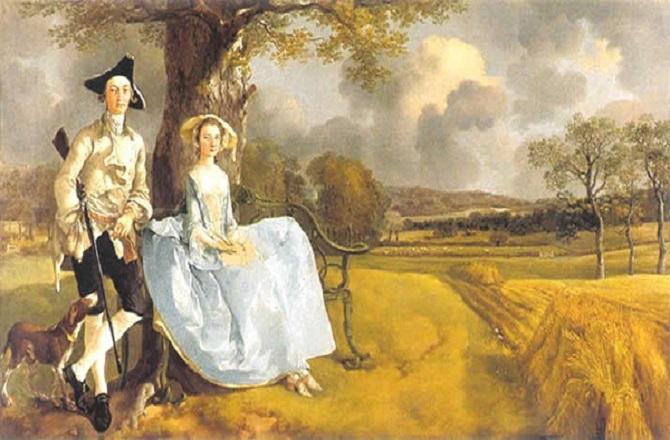
Local autonomy has a long tradition in Britain. It has shaped the political structure of vertical separation of power between the central and local governments in Britain and endowed the local gentry with a strong sense of local identity in early modern times. In the squire's mind, local interests often took precedence over national interests, and local politics was more attractive than national politics. Therefore, the strengthening of absolute monarchy in Britain in the early 17th century was bound to lead to a confrontation between centralization and local autonomy. In a sense, the English revolution began with the great tension between the trend of absolutism and the tradition of local gentry autonomy.
Since the 1970s, there has been a lot of controversy among historians about the gentry before the British revolution. According to the revisionist school, the local gentry had always held a sense of local identity before the British revolution, and it was the local gentry's opposition to the central government's intervention in local affairs that led to the British revolution, which was actually a struggle between absolutism and regionalism. The English revolution, they say, was an accident, not a historical inevitability. Although the revisionist school's view is biased, in quite a period of time before the British revolution, there was a collision and conflict between the trend of absolutism and the tradition of local autonomy between the central government and the local gentry. Although the 16th and 17th centuries, squire patriotism and regionalism of emotion and consciousness has the very big enhancement, but there is no denying the fact that when the central government and local interests conflict, local squire more local politics and local interests, especially with large real estate squire localism entrenched, national political consciousness relative indifference.
Britain's billed as the "mother of the local autonomy, local autonomy tradition can be traced back to ancient Anglo Saxon period," individual freedom, local autonomy, and in addition to the court the independence of the interference free from any interference "democratic tradition made the hundreds of years of central and local vertical decentralization of political structure and strong local identity.
Since the 16th century, the gentry has become a highly visible force among the local elites, and has gradually replaced the aristocracy in the control of local power. In feudal society, the great aristocracy was not only the foundation of monarchy, but also a potential threat to the powerful monarchy. In order to consolidate the royal power, the Tudor monarch strengthened the power and power of the local gentry at the same time he fiercely attacked the local nobles' separatist forces. By the end of the 16th century and the beginning of the 17th century, during the reign of queen Elizabeth of Tudor dynasty, the process of British aristocracy's obedience to the monarch had been completed. Although the aristocracy might still exert some influence on local affairs, the British aristocracy, as a class, declined comprehensively in economy, politics, society and other fields. At the same time as the aristocracy declined, the English gentry rose. As one American academic put it, "the gentry has become the backbone of rural society in England", gaining control of local government. From 1540 to 1640, the number of gentry in England tripled from 5,000 to 15,000. The gentry, though accounting for only 2% to 3% of the total population, owned nearly 40% of the country's land, and local administration was almost entirely controlled by the gentry. In the early middle ages, sheriffs were the top local officials, but in the 15th century the real power fell to magistrates, mostly squires. In addition to policing the countryside, magistrates administer justice, oversee price standards, set wage limits, punish thieves and vagabonds, and administer business and social relief. The gentry replaced the aristocracy as the main body of the local elite.
The influence of a strong and long-standing tradition of self-government, the political structure of vertical decentralization of power between central and local governments, and the disappearance of recognized international enemies by the end of the long war with Spain in the early 17th century, all made the gentry in the early 17th century have a lasting and strong local identity.
At the beginning of the 17th century for most British people, the rule of the central government in London, to some extent in some distant, almost do not related with their life, the actual ruler is local government, it is suggested the affairs such as weddings, responsible for some of the basic public services, such as road and bridge repair, supervision for the elderly and the poor and the illegitimate benefits. Either from the perspective of emotional or from the organization, the word "Britain" to the rural social classes under the squire and refers to constitute the combination of the counties of the British community, the central government in London for them is relatively abstract and distant, seems to be true and real, local communities are also a larger impact on their lives. As a result, they often see themselves as members of a local community in the first place, with the county as their primary area of allegiance. At the same time, the local political and economic interests are more important to them. Running the property left by their ancestors and holding public office in their hometown are also the ideals of most squires. Building and managing local social relations, establishing prestige in local communities, and seizing the power of local society constituted almost the whole of the squire's life, and they were more real than other ideals.
After hundreds of years of development, by the early 17th century the county was no longer a geographical concept, but a highly organized local administrative unit with its own government, recognized authority leaders, and a politically united society. Local pride is stronger than ever, most notably the birth of the geographical and county histories of 1560-1660. Many of the squire families in the counties had very long histories to run, and the squire, as the local elite, was chiefly occupied with the management of local affairs, and the discharge of the principal duties of the local community. At the same time, strong local identity prompted them to build a social network in the county. One of the main goals of the squire was to see his son continue to run the property left by his ancestors in the future, and his daughter marry the son of the squire who also owned the property in the county. Intermarriage within the county was very common. The most typical example was a woman named Mary hanewood, who died in the 1630s. There were 367 people after her. Perhaps the best hope for a squire was that the magistrates sitting in the county court of four seasons were all his sons, sons-in-law, brothers, or nephews. In relatively isolated Kent and Lancashire, the rate of inter-marriage is more than 70 per cent, compared with 30 per cent in Essex and hertfordshire.
In the early seventeenth century, as in the sixteenth century, the squire was still interested in local politics. It is human nature to fight for property and status, and local factions struggle fiercely. As humanism has changed people's way of thinking about public life, people begin to emphasize that it is people's obligation to participate in public life, "which is not only to meet the individual's sense of achievement, but also for the public happiness". Under the influence of this way of thinking, 16th and 17th centuries squire participate in public affairs consciousness is very strong, they have to participate in public affairs and to serve the interests of the public as a squire basic quality, is an important symbol of local elite status, as well as the important measure of social status and prestige, "on the surface, squire seems to be fighting over a piece of land or a job and, in fact, this is a fight for the local social status and power". The squire showed great interest and enthusiasm in local politics. The aim of the local gentry struggle was to establish a dominant position in the local society, to enter into the ranks of local rulers, and to obtain the recognition and obedience of other local elites and lower classes.
There were bitter feuds between the squires themselves, or between the squires' families, the most famous of which was Lancaster county, which was, as they said at the time, "like a field of battle. In the reign of queen Elizabeth, the earl of harrington ruled Lancaster county, but in the 17th century, the rule of the harrington family in Lancaster county was challenged by other squires, and Lancaster county was divided into two rival squire groups led by two squire families. Somerset fight between family is also very fierce, the county before the 1620 s has not noble, but by the local rule 25 family group, the county government into a battlefield, the squire family except a few big squire to was beyond the family strife, most squire will for a variety of reasons are forced to struggle between the two groups in the flood, "friendship, ambition, family ties, hatred, ignorance, or various kinds of factors such as weak can encourage local ruler, to join the camp".
Squire due to maintain the family's traditional economic interests and political interests, the purpose of local public affairs are more interested in the early 17th century, the local interests and local power as own duty, in place of social status and prestige as the important measure of their worth, "local administrative positions itself embodies the rulers more extensive social value and status in society", this inevitably is to make public kingship, weaken the absolute rule of local self-government power to produce the fierce collision.
The gentry replaced the aristocracy to become the local elites and performed the duties of local leaders. However, the social transformation had impacted the traditional local hierarchical social order. In order to maintain the traditional interests and status in the local areas, the gentry devoted more energy to local affairs, and their tendency of localism was more obvious.
Medieval England country order is more stable than mainland countries during this period, especially in southeast England agricultural areas, almost every village is a high degree of organization of hierarchical society, each estate had its own church, villagers common use of the Commons, the collective use of the Commons of the strong sense of moral economy and strong spirit of cooperation, farmers consciously agree with hierarchical authority, the underclass relatively tame. Until the end of the middle ages, although there were only a limited number of magistrates in England, the local society was stable for a long time because people recognized and accepted the patriarchal ideal of agricultural society. But by the end of the sixteenth and the beginning of the seventeenth century, that was basically broken.
From the 1690s, the British economy began to decline, which was followed by increasing social tension and local social problems. According to statistics, in the south and northwest of England during the 1620s, the number of thefts heard in circuit courts was unprecedented. Although migrants and women who violated social mores were cruelly flogged, the number of migrants and children born out of wedlock was on the rise, leading to moral panic in British society in the early 17th century.
At the same time, political consciousness at all levels of the country below the gentry was growing. Although most English people were still illiterate in the late 16th and early 17th centuries, the political consciousness of the rural underclass increased significantly in the 17th century. This was first manifested in the rapid spread of political news. In the English countryside in the early 17th century, many oral news, including political news, were spread or distributed in the form of rumors, vulgar limerick or ballads, some of which were about local conflicts or attacking local celebrities. In the 1620 s, with the emergence of many cheap printing, brochure about political news is everywhere, the walls of the beer house, the British home wall, even the clothes become the carrier of news, slanderous words spread news in beer house and market, many of them is to attack the local authority or the celebrity, the content of the libel is multifarious, involved in these people's private life and personal life style, behavior, etc. Sometimes, local people also used insulting rituals against politicians or unpopular local figures. These political news have unusual attraction in local society, which itself is the sign of local people's political consciousness awakening.
The increase of local social problems and the awakening of lower class political consciousness urged the squire to settle local affairs and devote himself to the interests of local villagers, so as to maintain their status and prestige in the countryside and establish the legitimacy basis for the local hegemony of the squire. Although in theory, as a local rulers squire has a dual identity, on the one hand, he is a local ruling elite, on the one hand, he is the central government in the local agent, but in fact, when the central government's interests and local interests conflict, gentry's first concern is local interests and their own purse, service was third in the central government often, if in the absence of direct supervision, they tend to local interests, rather than the interests of the central government.
At the beginning of the 17th century, the economic changes in Britain brought great pressure to the society, and the population growth in Britain had reached the peak at that time, these changes brought many new social problems. Such as the problem of refugees, moral decency, poverty and crime, and so on. For example, in the 1620s, theft was extremely serious, and other crimes increased significantly. Scholars of criminal history have found that the number of cases heard in the circuit courts increased rapidly under the stuarts. Even more worrying for the ruling class were the food riots, which followed every poor harvest from 1585 to 1640. At the same time, with the rise of European nation states, they fought with Britain for overseas colonies and commercial battlefields. The war needs to strengthen the political, economic, military, financial and other aspects of power of the royal government, so as to actively carry out external expansion. In this way, changes in domestic and foreign situations prompted European monarchs to strive for more effective control over various social groups, provinces and municipalities, as well as commerce and trade in the name of national rationality, thus starting the transition from feudal hierarchical monarchy to absolute monarchy.
Like other European countries, the late 16th and early 17th century Britain also appeared a trend of absolutism, but unlike other European feudal power, the absolute trend in fierce collision with traditional communalism, squire become the backbone of resist absolutism, absolutism was eventually lost in the flood of the revolution.
51due留学教育原创版权郑重声明:原创assignment代写范文源自编辑创作,未经官方许可,网站谢绝转载。对于侵权行为,未经同意的情况下,51Due有权追究法律责任。主要业务有assignment代写、essay代写、paper代写服务。
51due为留学生提供最好的assignment代写服务,亲们可以进入主页了解和获取更多assignment代写范文 提供北美作业代写服务,详情可以咨询我们的客服QQ:800020041。